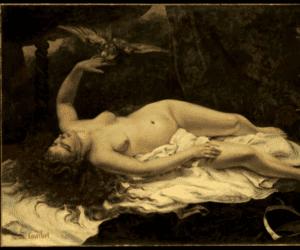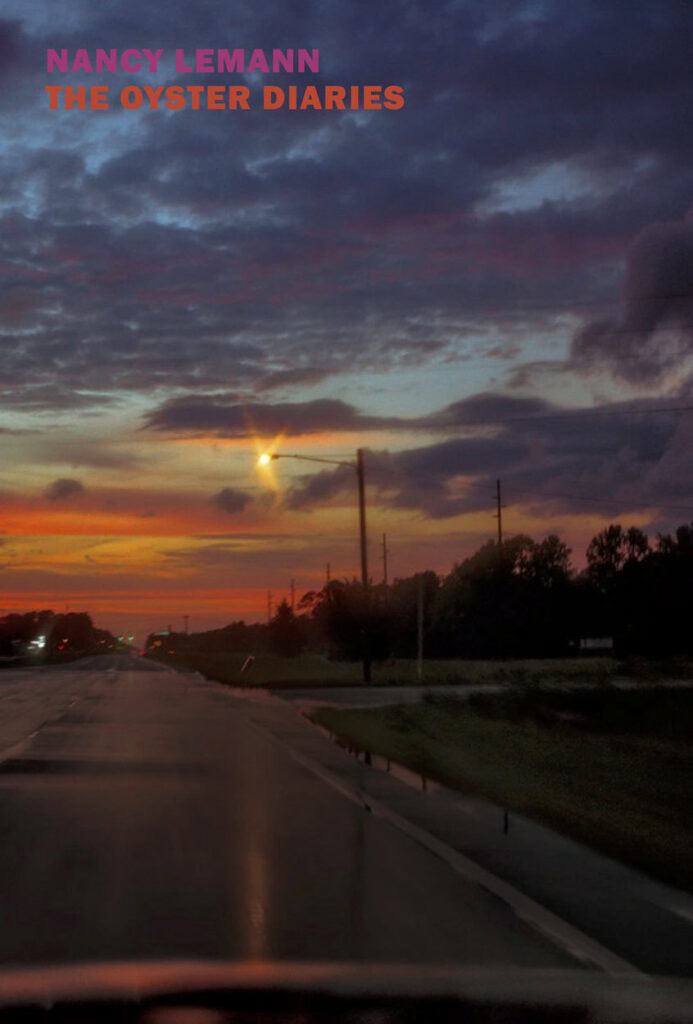
Cover image for The Oyster Diaries by Nancy Lemann (2026) | New York Review of Books
Maybe all families are alike on annual beach vacations. Tense.
We used to go on an annual vacation with the in-laws to the Southern coast in August. Our destination was an island off the coast of South Carolina. I-95 was horrendous driving down from Washington on a Friday after work, the weather sweltering, the dregs of some hurricane lashing about, whipping up the Georgia Sea Islands into a frenzy. We would be enmeshed in the usual overpowering panic-striking gridlock on Route 66 past Fairfax and Vienna and Manassas, madly clamoring past the old battlefields.
The first stop on the way down was Virginia. There is a pathological rivalry between Maryland and Virginia. People from Virginia are obsessed with it and can never get over it. Maryland is almost bland compared to Virginia and its hysterical adherents.
“What did you learn in school today?” I’d ask the kids on the endless drive. The kids were little then.
“Your skin weighs more than your brain,” Adelaide answered suavely.
“Wouldn’t it be weird if the ceiling was on the ground?” asked Grace.
Then they had a dramatic and simultaneous attack of nausea that caused me to veer off the highway and get all uptight at the rest stop.
Virginia did cast its spell at times. On a drive along the back roads of Virginia I had come upon certain haunted glades; and in the rustling of the leaves, the way the breeze comes through, the way the light is strange and still, you know how grave a thing went on there. Haunted by a knowledge of failure and mystery. Remorse, you might think, but that’s not exactly it.
“Do you know where Grace is?” I asked at the next rest stop.
“No, where is she?”
“She’s in the car having a breakdown.”
“Why?”
“Because she asked me if I would take her on a Disney cruise and I said no. I said I’m not a Disney person. She said but all her friends had gone on Disney cruises. I said I don’t want to be like all your friends. I just want to be like myself. And I may not perform religious observations when people expect me to, either. I don’t roll over and go fetch.”
“So now you’re really the one having the breakdown, Mom,” said Adelaide astutely.
A storm was gaining force. But you couldn’t take it seriously because it didn’t have a good name. A hurricane should be named for a voluptuous formidable black woman with a don’t-mess-with-me manner or a Southern matriarch who doesn’t take any of your guff. Then you could take it seriously.
“The polar bears are drowning. They’re drowning in the melted Arctic ice sheets,” lamented Adelaide.
“I know, I know, but what do you want me to do about it? Do you want me to go up there and give them artificial respiration or perform CPR on them or something?”
“The world is coming to an end in my lifetime,” Adelaide went on, “but not yours, so you and Dad are just basically living it up and drinking martinis in the Jacuzzi.”
Here’s something no one ever talks about. We didn’t know about climate change until our little kids taught us. No one told us about it before then. So it’s not only that we were idiots. We didn’t know we were idiots. At five thirty sharp a cacophony of crickets came on that sounded like some sort of digital alarm clock gone awry. The highway turned into a country road alongside green fields veering off into dark roads lined by palmettos until our destination was achieved, a condo in a high-rise on the beach.
The in-laws came with the trunks of their cars laden with food and meals that had been cooked in advance, as if embarking to a land in which starvation would otherwise be probable. The group consisted of two matriarchs—my mother-in-law and her sister, Aunt Beatrice—and their husbands and sons and daughters-in-law and grandchildren.
My mother-in-law was the older sister and she called the shots. I would describe Aunt Beatrice as a more normal version of my mother-in-law. My mother-in-law was sort of inscrutable. Which may have been enhanced by her film noir sensibility. She was somewhat dark and brooding. Aunt Beatrice was more mellow.
We went inside. Stan was sitting in an armchair reading the newspaper. This was Aunt Beatrice’s first husband. Although divorced from Aunt Beatrice twenty years earlier, Stan was still always hanging around in this happy-go-lucky way where no one had the heart to tell him it was causing tension. Adding to the tension was the fact that Aunt Beatrice had had a new husband for decades—the irascible Henry. Henry was considered to be surly. But you might be surly too if you were constantly confronted with your wife’s ubiquitous ex-husband.
When we moved to Washington I would come home and Stan would just be sitting there like part of the furniture watching a ball game or reading the newspaper.
“Think of me as a resource,” he would say.
So sometimes I did—and asked him questions about Washington.
“I’ll take care of it,” he’d say with his eyes closed, sweating.
“Stan, are you all right?”
“I’m just taking a break.”
He was a sweet-natured guy so it didn’t bother me too much. If he really had to be there for some extremely odd reason, he was welcome to just read quietly while I pursued my agenda. But if you’re supposed to chat all day, then it’s a problem.
Excerpted from The Oyster Diaries. Copyright © 2026 by Nancy Lemann; courtesy of New York Review Books.
Click here to read Nancy Lemann’s conversation with Coleson Smith on “the Doom” that preceded the publication of The Oyster Diaries, and the importance of keeping copyeditors at bay.