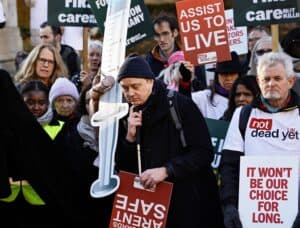
Be Positive. It’s Not Too Late (2019) | Boyce Duprey / CC BY 2.0
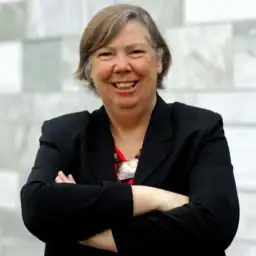
When a Norfolk Southern train derailed in East Palestine, Ohio, in 2023, most people saw a news story about a toxic spill, a controlled burn, and a small town blanketed in chemical smoke. What far fewer realized was that the substance deliberately set on fire was vinyl chloride: the building block of one of the most common plastics in the world. For Judith Enck, a former Environmental Protection Agency (EPA) regional administrator and a leading voice on environmental policy, the disaster was not an isolated accident but a vivid illustration of the true life cycle of plastic: Long before a disposable fork ends up in the ocean, the chemicals used to make it endanger the communities living near rail lines, refineries, and petrochemical plants.
Enck’s new book, The Problem With Plastic (The New Press, 2025), coauthored with Adam Mahoney, traces this hidden pipeline, from extraction to production to disposal, and argues that the plastics crisis is not the result of individual consumer failure but a political choice shaped by the fossil fuel and chemical industries. In a conversation with Katya Wack, she delves into the systems that keep plastic production soaring, the health risks now detectable in human bodies, and the grassroots organizers, often women, who are fighting for regulatory change.
Katya Wack: You start The Problem With Plastics with the East Palestine, Ohio, derailment. Why was that the right entry point for the book?
Judith Enck: A lot of people were aware of that train derailment, and yet a lot of people did not fully comprehend that the toxic chemical that was purposely put on fire from the train cars is vinyl chloride. And 99 percent of vinyl chloride is used to make polyvinyl chloride plastic, or PVC plastic. This was a good example of the life cycle of plastic. Making plastic involves a lot of toxic chemicals that have to be moved all over the country—and even transporting the chemicals poses a very significant risk.
What was really astonishing is they didn’t have to burn it. I think the governor of Ohio and the rail company, Norfolk Southern, just wanted that busy rail corridor opened up quickly.
When I worked at the EPA during the Obama administration, we actually had a train derailment in Paulsboro, New Jersey, of vinyl chloride. It was quite serious, but what we did was follow protocol: You bring in these vacuum trucks, remove the chemical, and then bring it to a commercial disposal facility. I never would’ve signed off on just dumping the chemical into ditches and lighting it on fire—so irresponsible. The people in those communities are still suffering health impacts.
Wack:Plastic pollution is clearly not an individual failure but a systemic one. Which systems—political, economic, regulatory—are most responsible for the crisis?
Enck: I think the major barrier to solving the problem is the political process.
We know how to solve the problem: Make less plastic. There are actually legislative proposals around the country to do just that, including here in New York. There’s a bill being hotly debated in the state legislature that would require a 30 percent reduction in single-use packaging and also bans the most toxic chemicals used in packaging: the Packaging Reduction in Recycling Infrastructure Act.
That bill was the most lobbied bill in the New York State legislature in the 2025 to 2026 legislative session last year. In October 2025, we actually issued a report where we documented 107 registered business lobbyists opposing the bill. It was an army of industry lobbyists. I saw them every day in Albany. They were terrified of a bill that only required a 30 percent reduction—not elimination—just a 30 percent reduction in single-use packaging and getting the most toxic chemicals out of packaging. There are proposals around the country. We just need more political power to get them adopted.
Wack: My recycling takes plastic, metal, and glass mixed together. I don’t trust how much of it is actually getting recycled.
Enck: Your metal, glass, and paper are being recycled. Plastic is the problem. Unlike an aluminum can, which becomes a new aluminum can, plastics can’t be recycled together. There are too many types, colors, and chemical additives: 16,000 of them. A bright orange detergent bottle and a black plastic takeout container can’t be processed together. Fossil fuel and chemical companies have known this for decades, yet spent hundreds of millions telling the public, “Don’t worry, just recycle it.” They knew most plastic would never be recycled.
Wack: You highlight how plastic production harms underprivileged communities, like Cancer Alley, Louisiana, and Appalachia. What do policymakers still misunderstand about the environmental racism built into plastic production?
Enck: I don’t think people appreciate that we have created sacrifice zones in Louisiana, Texas, and Appalachia, where low-income people and people of color are exposed to high levels of pollution because of plastic manufacturing. The cancer numbers in Cancer Alley are extraordinary, and people are getting sick because toxic chemicals are being released into the air and the water and the soil. It’s just not equitable or fair that people have to sacrifice their health in those communities, so everyone else can have single-use plastics.
There are alternatives to plastics. I love the natural alternatives like mycelium and seaweed, but we don’t need a big breakthrough. We have paper, metal, cardboard, glass—all of that can be made from recycled material, and then you actually can put it in your recycling bin at home and have a high confidence level that it’ll get recycled.
No one voted for more plastic, nothing tastes better in plastic. The reason we have so much plastic flooding the market today is because there’s a glut of fracked gas. Historically, plastics were made from chemicals and oil, today it’s made from chemicals and ethane, which is a byproduct of hydrofracking. So you have this glut of fracked gas on the market and all of this waste ethane. Companies like Shell and ExxonMobil are building new facilities that use that ethane waste product to make new plastic. People may be surprised to know that the number one producer of plastic in the country is ExxonMobil. So you’ve got fossil fuel companies that are shifting from petroleum to plastic production.
Wack: Were there community stories that especially stayed with you after writing the book?
Enck: We profile about nine or ten women who are doing extraordinary work in their communities. There are a couple that stand out. One is Diane Wilson, who lives in Calhoun County, Texas. She is a fourth-generation shrimp boat captain and works to protect the San Antonio Bay. She went toe to toe against this big company, Formosa Plastics, about how it was polluting San Antonio Bay. And she did everything from collecting water samples to making videos—she did what the regulatory agency should have been doing. She documented the pollution, and then she filed a citizen suit and got the largest ever settlement under the Federal Clean Water Act. And most importantly, she got these illegal discharges to stop.
I also want to mention a woman from New York City, Debbie Lee Cohen. I met her 10 years ago when I was regional administrator at the EPA. She had two little girls in New York City public schools, and she was really concerned that all the children were being served meals directly on polystyrene foam trays—which contains styrene, a known carcinogen. She teamed up with some other parents and convinced the New York City school system to stop using polystyrene trays.
She and some of her colleagues produced this documentary called Microplastic Madness (2019), featuring children in the New York City public school system working to get rid of plastics. Debbie passed away from cancer in 2024, which is heartbreaking given her work to protect children from toxic exposure. I sent the book to her husband. She would’ve been proud to see her work recognized.
Wack: We see how agencies are failing these communities. What would meaningful regulation look like?
Enck: Doing the opposite of what President Trump’s EPA is doing. They’re relaxing environmental regulations. When I worked at the EPA, we actually enforced the law. Enforcing the Clean Air (1970) and Clean Water Act (1972), reducing people’s exposure to toxic chemicals. The most important thing for people to do is vote and elect leaders who actually care about protecting public health and the environment. These new leaders like Mayor Zohran Mamdani in New York City will appoint people who are working in the public interest and not working just to protect corporate interests.
People should vote. They should volunteer on campaigns. They should hold elected officials accountable.
What we do in the book is three things: First we lay out the problem, and second, we make the case for systemic change. I’m a former federal regulator. My idea of systemic change is passing new laws and making sure that the laws are enforced. The third thing we do in the book is discuss what people can do in their personal lives. That’s also pretty important because microplastics are being found in various parts of our bodies.
The people who are really most at risk are the ones that are living near plastic production facilities in the Gulf South and Appalachia. But we’re all having our health compromised; scientists have found microplastics in our lungs, our blood, our kidneys, our heart arteries. Scientists looked at plaque from heart arteries and found that a large number of the plaque samples had microplastics in them, and that increased the risk of heart attack, stroke, and premature death. Microplastics have been found in the human placenta, breast milk, and testicles. And recently there was a study that it was found in the human brain and that it crossed the blood-brain barrier and resulted in a really significant increased risk of Alzheimer’s and other neurological diseases.
If you are pregnant or thinking of getting pregnant, which is a very large percentage of our population, you really want to avoid your exposure to plastics. That also goes for little kids. We point out obvious stuff, like bringing your own reusable shopping bag to the store. But we also talk about bringing your own reusable cutlery. I have this really convenient littlepackage I carry in my purse, which has bamboo forks, spoons, and knives. I don’t remember the last time I used a plastic fork when traveling. There’s pretty easy things you can do. Don’t put food [in plastic containers] in the microwave.
Take your own glass or stainless steel reusable containers to a restaurant if you think you’re going to have leftovers. I really want to caution people not to have hot food or hot beverages in plastic, because a lot of the chemicals in the plastic cup will leach into your beverage. So it’s in your own health interest to bring your own metal coffee mug to the coffee shop. We don’t have to do this perfectly, but think of the ways in your life that you’re regularly exposed to plastics if you drink coffee every morning. There was just a study out recently about the problems with those little Keurig K-cups. Try to avoid that. There is a cumulative impact of all of these microplastics. And the way they get into our bodies is either we breathe them in or we swallow them.
Even if you spend a lot of time and a lot of money avoiding plastics, you cannot fully avoid them. We need new laws to require companies to give us products with no plastic, or at least less.
Wack: If a state legislator reads this interview, what should be the first bill they try to pass?
Enck: We’re working on packaging a lot because 40 percent of plastic is used to make packaging. I’m really concerned about food packaging and plastic because I don’t want the chemicals leaching into the food and the beverages. The first thing they should do is pass a strong packaging reduction law. I think the bill pending in Albany is a great model, and it’s passed the Senate—we just have to get it through the assembly.
The book has some model bills. Legislators just have to go look at that. I mean, you can do the packaging bill. You could do 10 states of banned plastic bags. You can ban polystyrene foam food containers. You can do really modest things—I’m so surprised more states have not done this. A couple of states have banned the intentional release of balloons into the air. Every time I see a football game or a car dealership purposely putting balloons up in the air, they know that those plastic balloons are going to come down. And that’s a simple little thing. Let’s not intentionally release plastic balloons into the air, especially if you’re a coastal state. I think there’s just a small handful of local balloon laws, including in places like Mississippi and Alabama.
Wack: I guess that’s an example of leadership getting it right.
Enck: Yeah. And anything you try to do to reduce plastics will be met with opposition from an army of lobbyists from the plastics industry. We need legislators to really find their courage and display some leadership here. My view is that in five or ten years, elected officials are going to look back and there’s going to be more and more studies on what plastics are doing in our bodies. And these legislators are going to look back and say, Why didn’t we do more?
Wack: What do you hope readers will do after reading your book?
Enck: First, try to reduce plastics in your own life and then look at your kids’ or your grandchildren’s school. What can you do there to reduce plastics? Look at your faith community, your synagogue, your church, your mosque, and then you climb the ladder and show up at your city council and convince a city council member to introduce a really good bill to reduce plastics—and go to every single city council meeting because they’re not going to just do it on their own.
And then go to the state legislature, find organizations working inside the state legislature to reduce plastics, find legislators who are allies. Climb the ladder. It’s not easy, but it’s absolutely doable. Thousands of people, mostly women, are doing this all over the country today. We hear from people who on their own are getting new policies adopted. There were some people in Pennsylvania who reached out to us on how to make a good plastic bag ban because we are really good at drafting bills to make sure there are no loopholes. So we gave them our fact sheets, and we have a little organizing guide on how to ban plastic bags. The town where they got this plastic bag ban adopted includes one of the largest shopping malls in the country, King of Prussia Mall. And so when you go to that shopping mall, you no longer get plastic bags. That is a really big deal.
Click here to read an excerpt from The Problem with Plastic: How We Can Save Ourselves and Our Planet Before It’s Too Late, republished here courtesy of The New Press.