“Who’s Buried in Grant’s Tomb?”

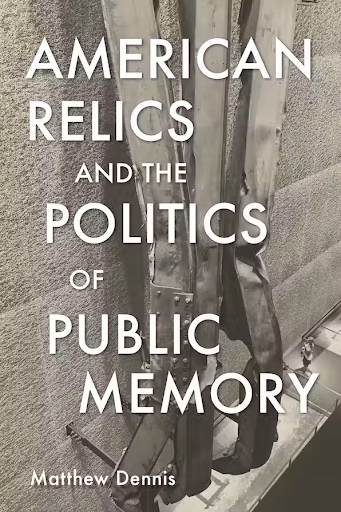
An excerpt from American Relics and the Politics of Memory

Relics’ ability to bridge space could match their facility in transcending time—they are conventionally transportable, sometimes through their fragmentation and multiplication, and their mobility enhances their usefulness to their possessors, who are thus able to deploy their power where they might have the greatest effect....

Read More
“Who’s Buried in Grant’s Tomb?”

History Rhymes

As history’s pendulum swings back, the problems and promises of globalization’s fragmented frameworks become almost too evident

The neoliberal thinking that has defined globalization in the West since the eighties decrees that state involvement in the economy is verboten-but that’s actually antithetical to America’s origins....

Read More
History Rhymes

Austerity, Then and Now

An excerpt from The Capital Order: How Economists Invented Austerity and Paved the Way to Fascism

Part of what makes austerity so effective as a set of policies is that it packages itself in the language of honest, hardscrabble economics. Vague sentiments such as “hard work” and “thrift” are hardly novel; they have been extolled by economists since the days of Adam Smith, David Ricardo, and ...
Read More
Austerity, Then and Now

Watergate Summer

In 1973, Robert MacNeil and Jim Lehrer’s determination to broadcast a Congressional investigation mattered to our democracy, and revolutionized television news

In other words, alternative television showed government as it was, mainlining the excitement of democracy to a dedicated and growing group of political junkies. At the same time, seeing the investigation play out live provided reassurance that Watergate was a constitutional crisis but not, as Nixon characterized it, a plot ...
Read More
Placeholder

How to Become a Queer Historian

An interview with San Francisco State University scholar-activist Marc Stein

Marc Stein is Professor of History at San Francisco State University, where he teaches U.S. law, politics, sexuality, gender, race, and social movements. He’s also an old friend: we met when Marc was in graduate school and I was starting my career as a visiting professor at The University of ...
Read More
How to Become a Queer Historian

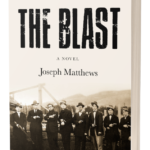
The Blast

An excerpt from a new novel about the radical Left in 1916 San Francisco

Adding to the cannery women’s travails was their invisibility to—the willful blindness of—the city’s traditional labor unions. The women had no specific skills, the labor leaders would say when pressed, and did not fit any particular craft or trade union, so their requests to the central labor council for some ...
Read More
The Blast

When Disasters Are Good For Museums

A conversation with historian Sam Redman about his new book, The Museum: A History of Crisis and Resilience

Samuel J. Redman is an Associate Professor of History and Director of the Public History Program at the University of Massachusetts-Amherst. The author of two previous books about American museums and the sciences that flourished there in the 19th and early 20th century, this spring, he published his third book: ...
Read More
When Disasters Are Good For Museums

How My Grandmother Ceased to Be African

How East African Asians have been written out of African history

And in the pre-independence era, a new racial politics emerged, one that has, for far too long, encapsulated much of East Africa’s postcolonial thought, in which families like ours were increasingly depicted as foreigners to a place that had long been our home....

Read More
How My Grandmother Ceased to Be African

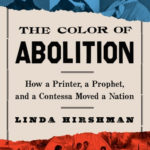
The Color of Abolition

Linda Hirshman introduces her new book on Frederick Douglass, William Lloyd Garrison, and Maria Weston Chapman

I was looking for the mechanics of activism—the meetings, the speeches, the broadsides, the litigation—for my analysis. And Garrison and Douglass were both central to the mechanics of activism. Their alliance fueled critical years of the movement, and their breakup affected the direction of the movement profoundly. This was the ...
Read More
The Color of Abolition

The Phantom of the “Greatest Generation”

“Citizen soldiers” of America, unite!

With the greatest generation serving as their antithesis, it has become de rigueur to mock and attack the baby boomers: spoiled children of fathers infinitely better than they. But whatever the errors and failings of the post-war generation, it rose up against war and racism and stifling rules, all of ...
Read More
The Phantom of the “Greatest Generation”

Two Sisters on Slavery’s Hallowed Ground

Captivity, survival, and joy on Maryland’s Eastern Shore

On a trip to Maryland’s Eastern Shore, my two sisters and I went to visit a neighborhood in the town of Oxford, a place they regularly visited as kids during summer vacation. A sign approved by the United Nations Educational, Scientific and Cultural Organization (UNESCO) had been installed there as ...
Read More
Two Sisters on Slavery’s Hallowed Ground