The Lonely Moralists

How antinatalists and radical vegans justify murder

On May 17, 2025, Guy Bartkus drove out to a fertility clinic in Palm Springs, California, and set off an explosive that killed himself and injured four others. Learning of this news, Bartkus’s father told media that the man who attacked the clinic was not the person he remembers. In ...
Read More

The Lonely Moralists

Docking the Long Tail of Culture

How mass culture has scored a decisive victory in the age of the Internet

In the past, the difficulty of acquiring long-tail content suggested that a person had many underlying status assets, such as intelligence, curiosity, and deep knowledge. When anyone can find anything obscure on the Internet within minutes, acquisition alone reveals no virtues or skills....

Read More
Docking the Long Tail of Culture

What Does It Mean to Be “Authentic”?

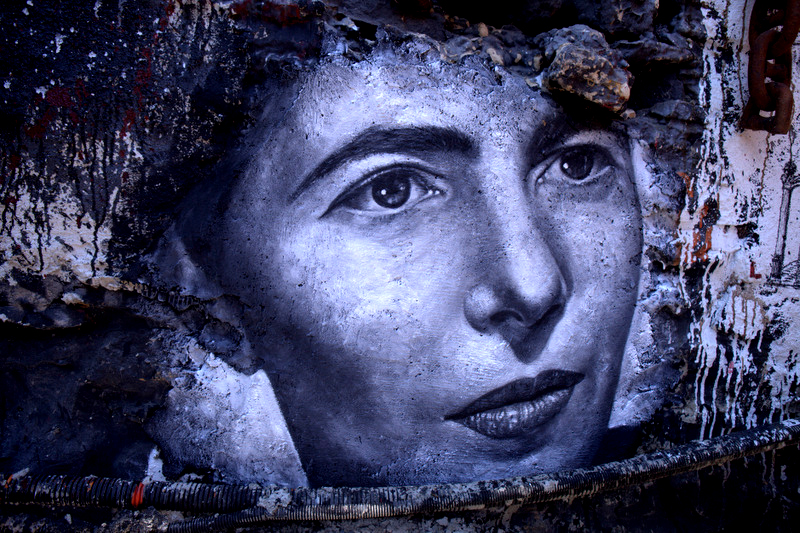
Skye C. Cleary chats with Luis Jaramillo about her new book on Simone de Beauvoir’s philosophy-from-life method

Finding your “authentic self” is often taken to mean: “Let’s turn inward and look for the blueprint that’s going to tell us what decisions we should make and that will make us happy.” But Beauvoir argued that we’re humans who are always growing, always changing....

Read More
What Does It Mean to Be “Authentic”?

The Blob and the Mob: On Grand Strategy and Social Change

In an excerpt from Rethinking American Grand Strategy, Beverly Gage examines how statecraft and social movements intersect

Means and Ends As other essays in this collection demonstrate, the idea of “grand strategy” emerged out of the world of military affairs. Under the famous rubric identified by British historian B. H. Liddell Hart, “strategy” was what generals did, while “grand strategy” fell to politicians and statesmen, charged not only with winning ...
Read More
The Blob and the Mob: On Grand Strategy and Social Change

Navigating the World of Grand Strategy with Christopher McKnight Nichols and Andrew Preston

The two historians talk to Public Seminar about Rethinking American Grand Strategy

Award-winning historians Christopher McKnight Nichols and Andrew Preston spoke (virtually) with Public Seminar editorial intern Gregory Coleman to discuss their new book Rethinking American Grand Strategy (Oxford University Press, 2021). Edited by Nichols and Preston with fellow historian Elizabeth Borgwardt, the collection of curated essays discusses what American grand strategy ...
Read More
Navigating the World of Grand Strategy with Christopher McKnight Nichols and Andrew Preston

Why We Shouldn’t Cancel Foucault

Even if he did have sex with underage boys in a Tunisian cemetery in the Sixties

_____ This interview appeared in Spanish in La Tercera, a daily newspaper published in Santiago, Chile. It was prompted by the claims recently made by Guy Sorman on French television and in The Sunday Times that (as the Times’ headline puts it) “FRENCH PHILOSOPHER MICHEL FOUCAULT ‘ABUSED BOYS IN TUNISIA’.” _____ Andrés Gómez ...
Read More
Why We Shouldn’t Cancel Foucault

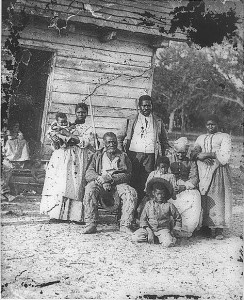
A Genealogy of White Privilege

An essay on the politics of confession & guilt

_____ How much shame and guilt should a movement for social justice try deliberately to cultivate?  In recent years, this question, superficially abstract, has again become personal for me, both in my ongoing involvement in political protest movements, and my job as a teacher, working at an institution devoted to promoting equity, ...
Read More
A Genealogy of White Privilege

Field Notes on “Sentencing the Present”

Diagnosing what is false without ceding what is beautiful

This is a final reflection by the curators of the seminar series “Sentencing the Present,” which was republished in full last week as “An Archive of a Crisis.” Because readers have asked us about the process and production of “Sentencing the Present,” when Public Seminar asked us to write a “post-mortem” ...
Read More
Field Notes on “Sentencing the Present”

Sentencing the Present: An Archive of a Crisis

Critical conversations in a time of crisis

A sentence is protean: It can describe, question, or cry out. A sentence is critical: In passing judgment, it names wrongs, makes decisions, and declares publicly. In a spirit of both open inquiry and political advocacy, and inspired by the response of readers to our own “Theses for Theory in ...
Read More
Sentencing the Present: An Archive of a Crisis

Sentencing the Present: Part Five

Critical conversations in a time of crisis

This is the final seminar of the "Sentencing the Present" series. For previous seminars, see part one, part two, part three and part four. A sentence is protean: It can describe, question, or cry out. A sentence is critical: In passing judgment, it names wrongs, makes decisions, and declares publicly. In ...
Read More

Sentencing the Present: Part Five

Sentencing the Present: Part Four

Critical conversations in a time of crisis

This seminar is part of an ongoing series. To read the previous issues in the "Sentencing the Present" series, see: part one, part two, and part three. A sentence is protean: It can describe, question, or cry out. A sentence is critical: In passing judgment, it names wrongs, makes decisions, ...
Read More
Sentencing the Present: Part Four