A Year After Cuts to USAID, an Urgent Reminder from the Ukraine-Poland Border

Documentary photographer Nancy Richards Farese captures the effects of Russia’s war in Ukraine and the US’s shutdown of foreign aid

In Przemyśl, a small city on the Ukrainian–Polish border, the train station has become something of a moral center. Late one November evening, fluorescent lights glare against steel rails as the night train from Kyiv pulls in late—again. The delay is familiar now. Russian forces bombed the rail line earlier ...
Read More
A Year After Cuts to USAID, an Urgent Reminder from the Ukraine-Poland Border

Against Innocence

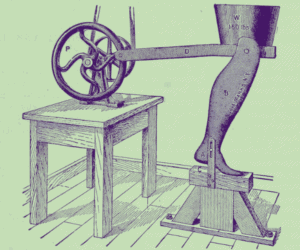
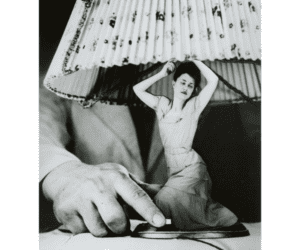
Unravelling the myth of the depoliticized child

1.  In my early twenties, I was captivated by the idea that creative processes can return us to the boundless dreamscapes of our childhood. Only back then, I thought, could we afford to experience the world somatically. Not yet captured by social conventions, our bodies had the potential to become everything. ...
Read More
Against Innocence

A House in the Middle of the Road

The cannibal colonization of homes and roads during Palestine’s Great Revolt

I spent the summer of 2025 in Bayt Lahm (Bethlehem), conducting archival research in the Jacir family’s historic dar, a beautiful two-story home built in the nineteenth century from Jerusalem stone. Taking a break one afternoon, I watched a short film, Mehdi Amel:The Colonial Mode of Production (2024), by the ...
Read More
A House in the Middle of the Road

One Battle After Another

With ICE in Minneapolis: An eyewitness account

On Tuesday morning, January 13, I was driving home after dropping my 9-year-old son off at school. There were ICE vehicles everywhere, I was surrounded by them on Park Ave. After a block or two of this, I parked and got out of my car. I saw that there were many ...
Read More
One Battle After Another

Honest Truths From Wrongful Deaths

In an excerpt from Our Grief Is Not a Cry for War: The Movement to Stop the War on Terror, the author surveys how left-wing intellectuals responded to 9/11

The first war the United States fought following 9/11, I argue, was a “war of interpretation” over the root causes and deep meaning of the attacks themselves. Below is a section from the first chapter of Our Grief Is Not a Cry for War (University of Chicago Press, 2025), in ...
Read More
Honest Truths From Wrongful Deaths

Attacks on Women’s Bodies Reveal the Logic of Genocide in Sudan

Sexual violence and the destruction of medical infrastructure are not separate catastrophes

On October 28, 2025, the Rapid Support Forces (RSF) overran the Saudi Maternity Hospital in El Fasher. Satellite images show what Yale’s Humanitarian Research Lab identified as bodies scattered across the hospital grounds. Videos filmed by RSF fighters themselves show militia walking through ransacked wards, stepping over piles of dead ...
Read More
Attacks on Women’s Bodies Reveal the Logic of Genocide in Sudan

Palestinians in Their Own Words, Their Own Genres

A review of Gaza: The Story of a Genocide

With the release of Gaza: The Story of a Genocide (Verso, October 2025), editors Fatima Bhutto and Sonia Faleiro bring us a powerful addition to a lamentable literary genre: the genocide anthology. Comprising more than 20 works of poetry, art, essays, and reportage by 23 contributors—many of them Palestinian—this volume ...
Read More
Palestinians in Their Own Words, Their Own Genres

It May Be the Last Time

Lithuanian art and culture resisting a takeover at the height of hybrid warfare

Recent developments in Lithuanian politics have produced a decisive, immediate, and spontaneous resistance from culture workers in various fields. The formation of a new coalition government led to the populist political project Nemuno Aušra (NA)—headed by the antisemitic politician Remigijus Žemaitaitis—being given control of the Ministry of Culture. Žemaitaitis has ...
Read More
It May Be the Last Time

A Republic, If We Can Afford It

Our Republic depends on both economic stability and civic participation

When the Constitutional Convention of 1787 ended, Benjamin Franklin was asked what form of government the delegates had created. His reply—“A republic, if you can keep it”—was no mere quip from an aging sage. It was a warning that republics are fragile, rare, and never self-sustaining. What Franklin implied was that ...
Read More
A Republic, If We Can Afford It

Is Social Media Destroying Democracy—Or Giving It to Us Good and Hard?

It’s easier to blame the algorithm than the bewildered herd

One of our era’s most influential narratives is that social media is destroying democracy and perhaps civilization itself. For the liberal establishment, this story helps to explain the surging success of right-wing populism, as well as collapsing institutional trust, growing polarization, and an apparent explosion of misinformation and deranged conspiracy ...
Read More
Is Social Media Destroying Democracy—Or Giving It to Us Good and Hard?