What Could History Have Been?

Imagining new approaches to the humanities

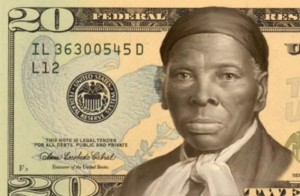
“What could history have been?” The question asks how events might have turned out otherwise, if only X had happened instead of Y. What if JFK hadn’t been assassinated? What if Hitler had? The official term for this kind of what-if thinking is “counterfactual history,” and it covers anything from ...
Read More
What Could History Have Been?

Refugee Movements and the Crisis of Europe

Theoretical Interventions

This panel discussion probes this crisis from a theoretical perspective and discusses its political implications by asking: What follows from this crisis for the European project, the paradoxes of international law, the role of the nation-state, and the resurgence of nationalism? And how does the emergence of new political practices and subjectivities ...
Read More
Refugee Movements and the Crisis of Europe

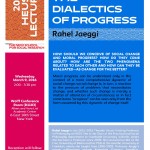
2016 Heuss Lecture: The Dialectics of Progress

Rahel Jaeggi

How should we conceive of social change and moral progress? How do they come about? How are the two phenomena related to each other and how can they be evaluated—as change for the better? These are questions which have repeatedly preoccupied contemporary philosophical discussion and which seem to be indispensable for a critical ...
Read More
2016 Heuss Lecture: The Dialectics of Progress

Claims to Populism, Danger to Democracy?

No US election campaign in living memory has seen as many invocations of “populism” as this one. Both Donald Trump and Bernie Sanders are labelled as “populists;” the term is regularly used as a synonym for “anti-establishment,” irrespective of any particular political ideas; it is also associated with particular moods ...

Read More
Claims to Populism, Danger to Democracy?

Against “Charm”

The Uses of Autobiography for Philosophy

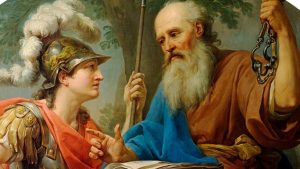
Moreover, how other philosophers lived and died is not the most important thing about them either: while life and work are inseparable, the latter takes pride of place. Heidegger went too far in saying that all one needs to know about Aristotle, for philosophical purposes, was that he lived, then ...
Read More
Placeholder

For the Last Time: “The West”

Revisiting the myth of the clash of civilizations

As information about the attacks in Paris, which left at least 128 people dead, gradually unfolds, I feel overwhelmed and disturbed. I am overwhelmed by the quantity of affective response to which I add my own grief, but I am also deeply disturbed by the way in which ...

Read More
Placeholder

Winter is Coming for Refugees in Germany

On the humanity vs. the organization of refuge

It’s getting cold in Germany. It’s actually hard to believe that it has only been weeks since warm images of the “good” German went around the world, of thousands of people welcoming even more thousands of refugees with food, toys, and clothes at train stations throughout the country. ...

Read More
Placeholder

The Problem with Humanitarian Borders

Toward a new framework of justice

The language of humanitarianism has played a central role in recent political and media debates about undocumented migrants crossing into Europe and North America. The unaccompanied minors crossing into the United States reached the designation of “humanitarian crisis” last summer, i.e. 2014, whereas the most recent tipping point ...

Read More
Placeholder

The Ethics and Politics of Responsible Belief

On liberalism and faith

Prior to his death in June 2007, Richard Rorty turned his attention to religious belief and its place in the public sphere. Rorty had long been presenting himself as the “village atheist” in the domains both of academic philosophy and public intellectualism: he viewed religious belief as the ...

Read More
Placeholder