An Uncanny Era of Post-revolution (1989-2014)

Today's post comes to us via the Transregional Center for Democratic Studies blog. -J.G.

On November 10, 2014, TCDS, partnering with the Polish Cultural Institute, hosted An Uncanny Era of Post-revolution (1989-2014) at The New School. Second in the series of events marking the 25th anniversary of the dismantling of Communist rule ...

Read More
An Uncanny Era of Post-revolution (1989-2014)

Anthropo{mise-en-s}cène

So this is the Anthropocene: An historical time, perhaps even a geological time, in which what we think of as separate entities, the human and the natural, find their fates entwined. What was once a separate nature or environment is no in place to ground us as us. Not only is ...
Read More
Anthropo{mise-en-s}cène

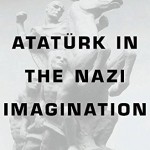
Review: Atatürk in the Nazi Imagination

Of all the 20th century strong men of Europe, Mustafa Kemal Atatürk [MKA] is the only remaining one whose authority and charisma is still a culturally, politically and even legally, unquestionable component of the public discourse in his country. Yet his influence on Hitler and 20th century fascism has gone unexamined. ...

Read More
Review: <em>Atatürk in the Nazi Imagination</em>

How I Got Over

Like most people in the arts, for many years I supported my artistic activities, along with the rest of my life, by holding down a day job. Corporate communications and advertising primarily in financial services were not such a bad gig, actually, and, in fact, were what I trained to ...

Read More
How I Got Over

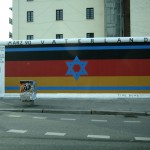
Israelis in Berlin and The Elephant in the Room

Notes on migration, pudding, an island economy, and frustrating metaphors (with cream on top)

“Fight from Tel Aviv, not from Berlin,” demanded former Minister of Immigrant Absorption Uzi Baram in Haaretz, while the New York Times  featured the infantile (or “still adolescent”) Israeli society as the center of frustration for many Israelis now clamoring to Berlin because of the impossible price of living. The coverage of ...

Read More
Israelis in Berlin and The Elephant in the Room

Byzantine Matters

The current issue of the New York Review of Books (December 18, 2014) contains Peter Brown’s review of Averil Cameron’s recent Byzantine Matters, which illustrates some of what is wrong with academia in general today, and especially with the discipline of history. Peter Brown is a truly great historian, famous ...
Read More
Placeholder

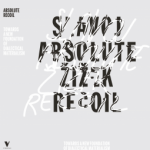
Notes on Zizek’s Absolute Recoil (2)

When ever Marxists lift their attention from vulgar matters and start creating theories of the subject, it is always the bourgeois subject that seems to need theorizing. Perhaps there is no other kind. Althusser illustrates his theory of ideology with an anecdote about being hailed in the street by a cop: ...
Read More
Notes on Zizek’s Absolute Recoil (2)

Notes on Zizek’s Absolute Recoil

Perhaps the first thing to know about Zizek is that his work entails a certain interpretive strategy, which in his new book Absolute Recoil he calls brachylogia, (41) which refers to statements of excessive brevity, with words left out. This can be coupled with Zizek’s insistence that authors misrecognize their more ...
Read More
Notes on Zizek’s Absolute Recoil

Democracy’s Crisis

We are currently experiencing a major crisis of democracy. What is at stake here is the specifically political dimension of a broader, multifaceted crisis, which also has other important dimensions -- for example, economic, financial, ecological, and social. Taken together, all of these aspects, including the political dimension of democratic ...

Read More
Democracy’s Crisis

Spinoza on Speed

Michael Hardt and Antonio Negri’s, Empire (Harvard University Press, Cambridge MA, 2000) is a book I have always been ambivalent about. It is a kind of Spinozist-accelerationist epic. (As Benjamin Noys has usefully shown). Spinoza on speed. I admire the boldness with which it attempted to describe the situation that was ...
Read More
Spinoza on Speed

The Old Patterns of the New Afghan Democracy

The Ghani-Abdullah Agreement and national and international stability in historical perspective

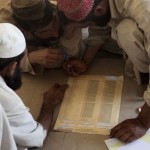
After a long electoral process, on September 27, 2014, Ashraf Ghani was sworn in as the Afghan president. The arrangements to grant him that office, which was earned in a controversial election, were not easy, because it forced a generous conciliation with Abdullah Abdullah, Ghani’s chief rival. Abdullah was granted ...

Read More
The Old Patterns of the New Afghan Democracy