‘The Uses and Disadvantages of Historical Comparisons for Life’

Tyrone Chambers, Krzysztof Czyżewski, Vera Grant, Jeffrey Goldfarb, Dan Shore, Marci Shore

Edited and abridged by Marci Shore KRZYSZTOF CZYZEWSKI: I’m here in Krasnogruda. It means at the border between Poland, Lithuania, and Belarus, in the northeastern corner of Poland. In my Borderland Centre, which, with my friends, I established 30 years ago, thinking of being more engaged in art, for solidarity with ...
Read More
‘The Uses and Disadvantages of Historical Comparisons for Life’

Creating Linkages

Witnessing the trauma of child separation

In his three-volume work on the child’s tie to his mother, Bowlby includes this passage from a colleague’s description of the young child who has been separated from his mother. At the time, parent-child separation happened in routine circumstances, like the hospitalization of the mother or the child. Before it ...
Read More
Creating Linkages

The Universal within the Particular

But the nagging question that has accompanied academic work on cultural memories of violence, apart from the historical knowledge it produces and helps to keep alive, is its relevance for our contemporary world, its ability to contribute to change. As much as the collage of Holocaust testimonies makes us painfully ...
Read More
The Universal within the Particular

The Counter

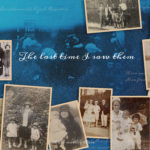
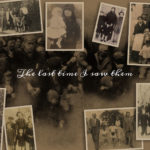
Around the same time, I was watching the Netflix series Immigration Nation about the activities of the American Immigration and Customs Enforcement agency ICE, and also the short documentary film The Last Time I Saw Them featuring interviews of Holocaust survivors who had been separated from their families. Several things ...
Read More
The Counter

Instead of Comparing

Six thoughts about engaging with a post-historical past

“History” as an academic discipline – and I am trying to articulate a possible vanishing point of Reinhart Koselleck’s life work here – “History” as a discipline would never have come into being without the existence of the  “historical world view” as a specific social construction of temporality (we can ...
Read More
Instead of Comparing

Boy Number 84

This is a photo of one of the children saved from the Jasenovac death camp in Croatia in 1942. Number 84 is already marked by hunger and negligence, beyond salvation. But who were these children?  They were Serbian children from villages in Croatia whose parents, civilians, were killed by Croatian forces called ...
Read More
Boy Number 84

On the Uses of the Palm

In my case, she’s not really my sister. In 1980, a nationwide policy was introduced in China allowing every couple to give birth to only one child. At a population control symposium that spring, a group of rocket scientists at the Chinese University of Science and Technology used cybernetics – ...
Read More
On the Uses of the Palm

Being Ahead of All Departures

In Paris in the 1920s, Hemingway has returned from the bookstore run by the lovely Sylvia Beach, who is very nice to him, letting him borrow books without a deposit. It is with that goodness in his heart that Hemingway returns to his cramped flat and tells his wife about ...
Read More
Being Ahead of All Departures

Child Separation

A documentary poem reacting to a film about the separation of children from their parents in Nazi camps

The child Fred is told by his mother: “You must not look back.”And he did not look back – and he survived – and his mother did not.Orpheus was not as strong you were, Fred – he looked back, the poor thing.On December 6th, 1938, in the middle of the ...
Read More
Child Separation

Separation

Deserts, hurricanes, and classrooms

Personally, these stories brought to mind a student, Jonathan, who recently took my college writing class. He’s a first-year full-time student who manages a fast-food restaurant in City Heights, a dense refugee-packed neighborhood in San Diego.  Four years ago, he was my strongest 8th grade English student in middle school. He ...
Read More
Separation

Memory’s Fragile Thread

Judaism’s view of – and response to – family separation as theological crisis

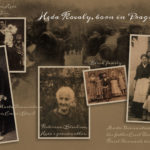
Heda Kovaly’s memory of the day in spring 1941 when she was sent to the Gross-Rosen labor camp focused on an evanescent memento of her murdered mother: “My mother, I couldn’t think of anything except my mother, my mama, and I remember sitting on the ground and held out my ...
Read More
Memory’s Fragile Thread