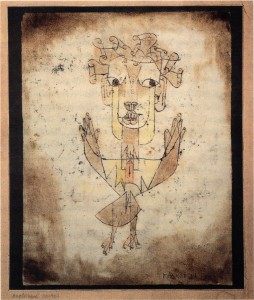
A Globe, Clothing Itself with Ears

Stories of speaking with animals are as old as human history

Human ambivalence about animal language persists and is linked with our uncertainty about human status: Are we one animal among others, or does something truly set us apart? Debates over animal language are a touchstone for human uncertainties about our role in the cosmos....

Read More
A Globe, Clothing Itself with Ears

Imagining a Post-Constitutional Political Culture

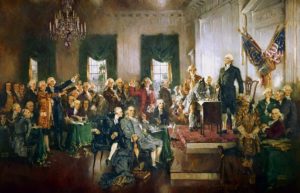
Amid a racial uprising and calls for “political revolution,” why pretend that our political disputes turn on the “best” reading of an eighteenth-century text, the Constitution?

Aziz Rana’s genealogy of American constitutional veneration overturns the conventional wisdom, not merely about the chronology, but also about the reasons for this worshipful attitude towards a document drafted in the late eighteenth century. At the same time, his forthcoming book, Rise of the Constitution, is politically explosive: for it ...
Read More
Imagining a Post-Constitutional Political Culture

What Did Aristotle Think About Slavery?

Why we need to read great books closely

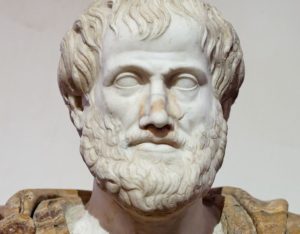
I admire Professor Collard’s attempt to defend Aristotle despite his views on slavery. My question is whether he actually held the views she attributes to him. We must avoid two common responses that seem to me misguided. The first is to reject Aristotle out of hand because his views do not ...
Read More
What Did Aristotle Think About Slavery?

Don’t Let Campuses Become Plague Dystopias

College and university presidents should have the courage to halt their reopening

In late May, the President of Notre Dame and Thomist philosopher Fr. John I. Jenkins defended his decision to reopen its campus in terms of the university’s religious and moral values, including the virtue of having soldierly “courage” in the face of death. This, he insisted, was a virtuous Aristotelian “mean” between ...
Read More
Don’t Let Campuses Become Plague Dystopias

Expendable Bodies

What Sophocles can teach us about our political moment

An ancient Greek tragedy, Sophocles’s Philoctetes, can help us to think holistically about our own political moment. What Sophocles shows us is that the same bodies the polity dominates, annihilates, or consigns to suffering in isolation it also tends to use for its own ends. That political communities too often view ...
Read More
Expendable Bodies

Aristotle on Charlottesville

‘Mixed Actions’ and Exercising Judgement on Violence

In the opening movement of book 3 of his Nicomachean Ethics, Aristotle argues that, at bottom, each and every human being is responsible for essentially every action they undertake; put another way: there is nothing a human being does for which they ought not to be praised or blamed. This ...
Read More
Aristotle on Charlottesville

What Makes Reasonable Force Reasonable?

Conceptions of Virtuous Rationality

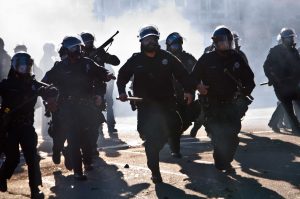
In a recent essay published by Public Seminar, I argued that we should rethink the appeal to fear as a motive and justification for the use of force by police officers. Although I concluded that fear should not be seen as a legitimate defense of an officer’s decision to use force, my ...
Read More
What Makes Reasonable Force Reasonable?

Aristotelian Reflections on President Trump’s Unauthorized Missile Strikes in Syria

The opposite of cowardice is rashness, and courage the mean between

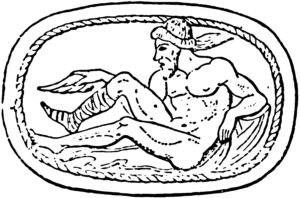
Earlier in the same work, while concluding his general discussion of virtue and vice, Aristotle refers to the famous story of Odysseus facing the original “rock and a hard place” dilemma. Odysseus knows that he has no choice but to pass through the middle of the whirlpool and a ferocious ...
Read More
Aristotelian Reflections on President Trump’s Unauthorized Missile Strikes in Syria

Does Donald Trump Speak?

"I am your voice!" booms Donald Trump at the climax of his acceptance speech at the Republican National Convention. “Speech is something different from voice,” writes Aristotle in the Politics. “Voice” (phone) is possessed by both humans and animals, enabling us to communicate basic desires, most especially pleasure and pain. “Speech ...
Read More
Does Donald Trump Speak?

Benjamin in Jerusalem

The Middle East as crisis and critique

This month, two conferences and one exhibition dedicated to Walter Benjamin’s legacy are descending on Ramallah, Jerusalem, and Tel Aviv. Because of an unhealthy mix of political considerations, security measures, and academic snobbery, I will partake in none of them, despite my deep roots in this troubled land and my ...

Read More
Benjamin in Jerusalem

Common Decency: Kurt Vonnegut as Moralist

Kurt Vonnegut is often remembered these days as a humorist, a cynic in the Mark Twain mold, a novelist whose imagination ranged far and wide but lacked gravitas, even though he dealt with tragic themes like the Dresden firebombing and the fictional apocalypse of ice-nine.  These recollections are, I believe, ...
Read More
Placeholder