Althusserians Anonymous (4)

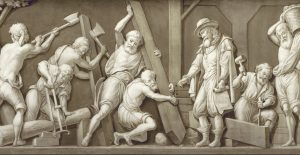
This post has been revised here: https://publicseminar.org/2016/02/aa/ The real significance of Althusser is in the transition from a Marxism of the party to a Marxism of the academy. The means via which he got us from one to the other are now moot. It is rather like the fable of Captain Cook’s axe: ...
Read More
Althusserians Anonymous (4)

Althusserians Anonymous (3)

This post has been revised here: https://publicseminar.org/2016/02/aa/ Let’s look at two famous Althusser essays from the period 1962-1963. Contradiction and Overdetermination’ builds on Althusser’s ‘On the Young Marx’ essay, in deciding against the various Hegelian readings of Marx. Althusser rejects the metaphors of ‘turning Hegel right side-up’, or ‘restoring the rational kernel of ...
Read More
Althusserians Anonymous (3)

Althusserians Anonymous (2)

This post has been revised, here: https://publicseminar.org/2016/02/aa/ The thing about being a recovering Althusserian is that one can’t help remembering the good times. Being on Althusser really does feel great. It makes certain problems disappear. For example, one is no longer trapped in the oppressive reality of Hegelian Marxism, and yet nor does ...
Read More
Althusserians Anonymous (2)

Althusserians Anonymous (1)

This post has been revised, here: https://publicseminar.org/2016/02/aa/ I am a recovering Althusserian. For decades now I have been Althusser-free, for the most part, but we all have our lapses. The first step to becoming a recovering Althusserian is to recognize that you have no control and are unconsciously always a little bit ...
Read More
Althusserians Anonymous (1)

#Accelerate and inertia

Thinking historically and systematically would appear to be something of an urgent requirement for critical theory in the Anthropocene. Yet there was a great allergic reaction to all such lines of thought in the late twentieth century from which social thought never really recovered. Recently, there has been some attempt to ...
Read More
#Accelerate and inertia

#Accelerate in reverse

Nothing seems more urgent now than to find useful ways of thinking what Donna Haraway calls naturecultures, and to do so historically. The elimination in advance of the problem of the continuities from the natural to the cultural that is such an ingrained prejudice in the humanities and social sciences ...
Read More
#Accelerate in reverse

Extrapolation, not Acceleration

We hoped; we waited for the day The state would wither clean away, Expecting the Millennium That theory promised us would come: It didn’t… W. H. Auden, New Year Letter, 1941 It would appear that in the twenty-first century, we should probably relinquish a faith in a force external to capital, even if generated by it, ...
Read More
Extrapolation, not Acceleration

Joseph Needham, the Great Amphibian

Like most people who teach in the humanities, I think that there are ways of understanding the present through the past. We return again and again to certain key authors as touchstones. There are two different ways of going about this, however. One is to take the succession of key authors ...
Read More
Joseph Needham, the Great Amphibian

Anarchism and Feminism: Toward a Happy Marriage?

Some have argued that the marriage between Marxism and feminism ended up in an unhappy marriage: by reducing the problem of women’s oppression to the single factor of economic exploitation, Marxism risks dominating feminism precisely in the same way in which men in a patriarchal society dominate women (<a href="http://www.amazon.com/Women-Revolution-Discussion-Political-Controversies/dp/0896080617/ref=sr_1_6?ie=UTF8&qid=1404140568&sr=8-6&keywords=Sargent+1981" ...

Read More
Anarchism and Feminism: Toward a Happy Marriage?

Ernesto Laclau, 1936-2014

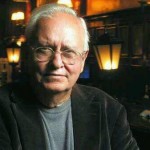
It is with great sadness that we learn of the death of Ernesto Laclau, the outstanding Argentinean political philosopher, at the age of 78. Ernesto had a heart attack in Seville where he was giving a lecture. He was the author of landmark studies of Marxist theory and of populism ...

Read More
Ernesto Laclau, 1936-2014