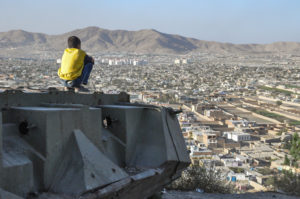
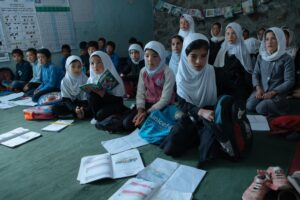
The Taliban’s Systematic Erasure of Women Is Crippling Afghan Society

The future of Afghanistan depends on the participation of all its citizens, not just half of them

After the Taliban banned girls and women from studying beyond the sixth grade, in 2021, one avenue for education remained open: medical institutions, where they could train to become nurses, midwives, and pharmacists. However, in December 2024, Taliban officials announced that female students would now be barred from attending medical ...
Read More
The Taliban’s Systematic Erasure of Women Is Crippling Afghan Society

The U.S. Withdrawal from Afghanistan

Past Present Podcast, Episode 291

Here are some links and references mentioned during this week’s show: After nearly two decades, President Biden announced that all American troops were leaving Afghanistan, which quickly fell to the Taliban. Natalia referred to Jeremy Varon’s Washington Post piece about the antiwar movement, and to this conversation at Public Seminarbetween historians ...
Read More
Placeholder

Individualism Vs. the Common Good in America

For all that Republicans insist that individualism is the heart of Americanism, in fact the history of federal protection of the common good began in the 1860s

_____ America is in a watershed moment. Since the 1980s, the country has focused on individualism: the idea that the expansion of the federal government after the Depression in the 1930s created a form of collectivism that we must destroy by cutting taxes and slashing regulation to leave individuals free to ...
Read More
Individualism Vs. the Common Good in America

In the Aftermath of War

What the post-1975 history of the Vietnam War should teach us about the days, months, and years after the United States leaves Afghanistan

_____ As the military situation in Afghanistan began to unspool at the end of July, and comparisons to the United States 1975 evacuation of Saigon proliferated, I wanted to know more. So I reached for Amanda Demmer’s After Saigon's Fall: Refugees and US-Vietnamese Relations, 1975–2000 (Cambridge University Press, 2021) to think ...
Read More
In the Aftermath of War

The 20-Year Militarization of Our Borders Has Failed like the 20-Year Military Occupation of Afghanistan. Let’s End Both

They cause more harm than good

_____ The conventional wisdom in Washington already appears to be that the president made a huge mistake by failing to evacuate Americans and Afghans before that government’s collapse and the Taliban took over. I suppose that’s the result of a video from Kabul in which desperate people are witnessed doing desperate ...
Read More
The 20-Year Militarization of Our Borders Has Failed like the 20-Year Military Occupation of Afghanistan. Let’s End Both

20 Years of U.S. Occupation Was Brutal in Afghanistan—And So Will Be the Exit

Alongside the relief of ending the longest war in modern American history, we need to acknowledge the horrors of what we are leaving behind in Afghanistan

_____ When a reporter in early July asked Joe Biden a question about the war in Afghanistan, the U.S. president sniped back, saying, “I want to talk about happy things, man.” Biden revealed, perhaps unintentionally, that the situation in Afghanistan is anything but a happy topic. It might have been one ...
Read More
20 Years of U.S. Occupation Was Brutal in Afghanistan—And So Will Be the Exit

Watching Afghanistan

On television and the Afghan culture wars

_____ Media scholar Wazhmah Osman’s book, Television and the Afghan Culture Wars: Brought to You by Foreigners, Warlords, and Activists (University of Illinois Press, 2021) analyzes the impact of international funding and cross-border media flows on the national politics of Afghanistan. Her research is rooted in feminist media ethnographies that focus ...
Read More
Watching Afghanistan

Instead of Focusing on Russian Bounties to the Taliban, Why Doesn’t the U.S. End the Afghan War?

Lawmakers are outraged over a recent story alleging that Vladimir Putin may be paying off Taliban soldiers to kill U.S. troops. But why are those troops still in Afghanistan?

Unfortunately, this crucial point has been lost amidst the frenzied responses to the story about Russian bounties. Instead, the revelations have fed the tempting narrative that Trump is a stooge of Russian President Vladimir Putin. Republican Senator Mitt Romney of Utah -- who is now apparently a stalwart of the ...
Read More
Placeholder

The U.S. and UK Are a Wrecking Ball Crew Against the Pillars of Internationalism

They have undermined the sovereignty of nations and mutilated international law

Ambassador Kelly Craft, the U.S. ambassador to the UN, spoke at the same meeting. She praised the charter and called upon the member states of the UN to bring its values into the world. However, Ambassador Craft said, “On far too many occasions, we have seen nations that are parties ...
Read More
The U.S. and UK Are a Wrecking Ball Crew Against the Pillars of Internationalism

The Moby Dick Problem of War: An Interview with Steve Coll

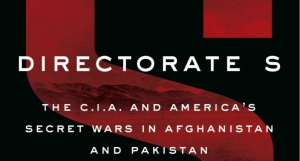
The NBCC nonfiction award winner on Directorate S: The CIA and America’s Secret Wars in Afghanistan and Pakistan

In March, The New School hosted this year’s National Book Critics Circle awards, which honor literature published in the United States in the previous year. The awards are presented in six categories -- autobiography, biography, criticism, fiction, nonfiction, and poetry -- and are the only U.S. literary awards chosen by ...
Read More
The Moby Dick Problem of War: An Interview with Steve Coll

Asymmetric Legality

The Invisibility of High-Tech Violence in Afghanistan

The decision by the International Criminal Court’s pre-trial chamber to not authorize a full investigation into the “situation” in Afghanistan has served as a reminder that international criminal justice is political: it depends on political support and it shapes political debates about armed conflict, violence, and justice. Yet a closer ...
Read More
Asymmetric Legality