Reckoning with Deva Woodly’s Reckoning

What kind of coalition must the Left forge in order to defeat Trumpism and whatever comes after it?

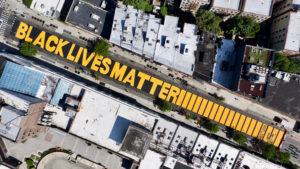
Black Lives Matter was not born in the streets, even if it sometimes moved there following the police murder of Michael Brown in 2014, and again after the killing of George Floyd in 2020. But the movement, after these intense episodes of protest and direct action has not stayed in ...
Read More
Reckoning with Deva Woodly’s <em>Reckoning</em>

On Fascism, Non-fascism, and Antifa

Natasha Lennard in conversation with James Miller

JM: Since you've written an entire book with the title Essays on a Non-Fascist Life, can you tell me a bit about how you chose that title, and what the term "non-fascist" means to you, in the context of those essays? We both know the appearance of the phrase in the context ...
Read More
Placeholder

The Fight for International Students is a Blow to Racism

The Trump administration’s hostility towards international students is only one chapter of a longer history

But the short episode achieved its purpose: intensifying the discomfort on international students and workers by throwing international students, college administrators, and faculty into needless turmoil. While many understood the move as intended to coerce universities to open up their campuses at a time when COVID-19 cases are soaring in ...
Read More
The Fight for International Students is a Blow to Racism

“Brother Doc,” a Co-Conspirator for Justice

For a physician who supported armed struggle in the 1970s and 1980s, a commitment to radical anti-racism was everything

But what kind of action? There have always been Americans who could imagine a world of racial equality and justice, and who worked in cross-racial alliances to make it happen, not just -- as we do today -- at a street protest, or by issuing heartfelt statements of support, or ...
Read More
“Brother Doc,” a Co-Conspirator for Justice

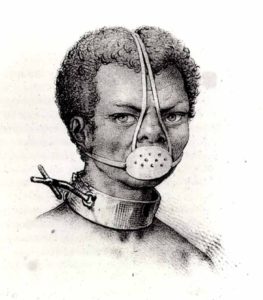
Let’s Build a Monument to Anastácia

An enslaved woman’s image that has traveled around the hemisphere can help us rethink slavery and memorialization

In May 2020, as the social movement to remove racist monuments grew and the COVID-19 pandemic spiraled out of control, two white women protesting against social distancing and masks were photographed with a sign. It read: “Muzzles are for dogs and slaves. I am a free human being.” It featured ...
Read More
Let’s Build a Monument to Anastácia

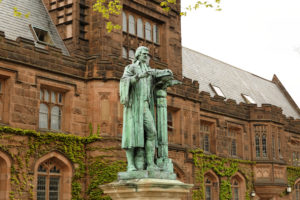
The Case of the Hijacked Statue of the Great Abolitionist

What the fate of the monument to Edward Coles in Edwardsville, Illinois, can tell us about the ironies of hoping that statues might tell a new American story

Recently, renewed efforts have been made to diversify the kinds of Americans commemorated by public monuments. A few weeks ago, the New York Times published an op-ed by David Blight, the Pulitzer-Prize-winning biographer of Frederick Douglass; as the title of the piece put it, “There’s a Chance to Tell a ...
Read More
The Case of the Hijacked Statue of the Great Abolitionist

On Our Revolutionary Moment

Putting today’s revolt against institutional racism into historical context

Protestors, who had been staging increasingly violent strikes, had assailed City College, CUNY’s flagship school, located in the middle of Harlem, as a racist institution that used academic standards to deny admission to all but a handful of Black and Puerto Rican students. They demanded that CUNY abandon those standards ...
Read More
On Our Revolutionary Moment

Why the Harper’s Letter Got It Wrong

The most serious threats to protest and open debate come not from the left or the right but from the state and powerful political institutions

So I took a new job in a new city and began again. I have been thinking about my decision to speak up, and its costs, in light of The Letter. You know the one: the open letter in Harper’s magazine that praises the “needed reckoning” of the past few months ...
Read More
Why the <em>Harper’s </em>Letter Got It Wrong

Why I Didn’t Sign the Harper’s Letter

Meeting our Black Lives Matters moment — and what the letter gets right

The now famous Harper's letter signed by 153 intellectuals has understandably stirred furious debate. Though I declined to sign it when asked, I disagreed with nothing in the letter, and I knew that I would continue to have misgivings about my decision. After all, the letter is informed by a concern ...
Read More
Why I Didn’t Sign the <em>Harper’s </em>Letter

A Declaration of Independence by a Princeton Professor

Freedom to think for oneself is still a right, not a privilege

In Congress, on July 4, 1776, came the “unanimous Declaration of the thirteen united States of America.” Signed by 56 men, many of whom were considered national heroes just a few minutes ago, it opens with a long and elegant sentence whose first words every American child knows, or used ...
Read More
A Declaration of Independence by a Princeton Professor