Panama Against Trump

A country’s fate hangs in the balance as protestors take to the streets

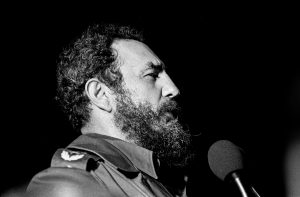
As Donald Trump prepared to take office in late 2024, the American president-elect issued a stunning threat: to “take back” the Panama Canal, almost a quarter century after the United States had returned control of the canal and the zone around it to the sovereign state of Panama.  Once in office, ...
Read More

Panama Against Trump

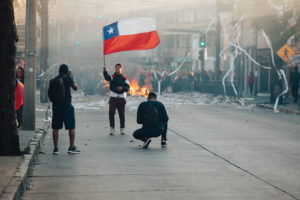
Turning Art into a Political Weapon

Scholars Terri Gordon-Zolov and Eric Zolov discuss the aesthetics and significance of the Chilean estallido

Wearing protest iconography was also a way to support the movement. And it was potentially risky. You could wear a handkerchief to cover your eyes from tear gas or to make yourself more anonymous or you could wear a green scarf to support reproductive rights. ...

Read More
Turning Art into a Political Weapon

In Support of Professor Luciana Cadahia

An open letter

This past Tuesday morning, Professor of Political Philosophy and Latin American Critical Theory at Pontífica Universidad Javeriana (Bogotá) received a Kafkaesque letter that read (the translation is ours): “According to the article 28 of Law 789 of 2002 of our Faculty, we hereby notify you that your contract has been ...
Read More
In Support of Professor Luciana Cadahia

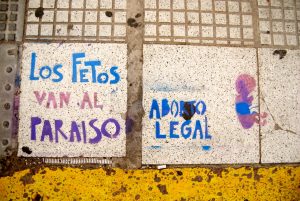
The Abortion Debate in Argentina

Or how men, priests, and the ignorant subjugate women

In the very early hours of August 9, the Argentinean Senate missed a historic opportunity to become the first Catholic-majoritarian country in the global south to legalize voluntary abortion. Instead, the upper chamber’s total rejection of abortion revealed three dynamics that prevent women from acquiring full citizenship rights, and which ...
Read More
The Abortion Debate in Argentina

What Do Latin Americans Do When They Do Religion?

From Destination to Journey

Economic development, democratic governments, and a growing middle class have changed the spiritual realm in Latin America. Once dominated by Catholicism, today’s Latin Americans are migrating from one religion to another as they look for meaning and engage with superhuman powers. While there are many studies of the changing nature ...
Read More
What Do Latin Americans Do When They Do Religion?

From Here and There: Diaspora Policies, Integration and Social Rights Beyond Borders

An excerpt and interview from Alexandra Délano Alonso and her latest book

In From Here and There, Délano Alonso, Associate Professor and Chair of Global Studies at The New School, offers an exclusive insight into and a critical evaluation of an area of migration governance that is rarely discussed: the processes through which Mexico and other Latin American countries are establishing programs to give ...
Read More
From Here and There: Diaspora Policies, Integration and Social Rights Beyond Borders

The Mirage of Universalism Behind European Localism

An Excerpt from The Palgrave Handbook of African Philosophy

It should be clear by now that Eurocentrism is not limited to the “bad,” but it encompasses also the “good” and the “ugly.” That means that Eurocentric critiques of Eurocentrism are indeed part of the image of totality that Eurocentrism projects. The question is to delink from it and to ...
Read More
The Mirage of Universalism Behind European Localism

Going Backward in Argentina

A country is not a corporation

The election of Mauricio Macri on November 22, 2015, to the presidency in Argentina by a slim 51% to 49% over Governor Daniel Scioli marks a sharp break with 12 years of progressive government and the reconstruction of the state after the neoliberal period of the 1990s. It is a ...

...

Read More
Going Backward in Argentina

Art, Homicide, and the Anonymous Dead in Latin America

On the Teresa Margolles exhibit at the Neuberger Museum of Art in Purchase, NY

From July through October, the Nueberger Museum of Art featured these pieces, conceived by Mexican artist Teresa Margolles and executed by six groups of curators and embroiderers. Entitled “We Have a Common Thread,” these fabrics present a complex statement about violence in the Americas. Latin America is ...

Read More
Placeholder

When Neo-Fascism Was Power in Argentina

An anniversary few want to remember

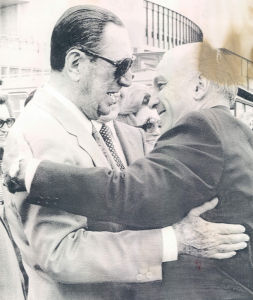
After forty years, though more historical research is needed on the presidency of Isabel Perón (1974-1976), what we know today leads us to consider that her Peronist government was one of the most violent in the violent history of Argentina. To be sure, political violence was quite extensive ...

Read More
When Neo-Fascism Was Power in Argentina