Turning Art into a Political Weapon

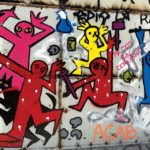
Scholars Terri Gordon-Zolov and Eric Zolov discuss the aesthetics and significance of the Chilean estallido

Wearing protest iconography was also a way to support the movement. And it was potentially risky. You could wear a handkerchief to cover your eyes from tear gas or to make yourself more anonymous or you could wear a green scarf to support reproductive rights. ...

Read More

Turning Art into a Political Weapon

The Walls of Santiago

How the Joker and Pikachu become symbols of the Chilean social uprising, in an excerpt from Terri Gordon-Zolov and Eric Zolov’s new book

Humor provided a powerful weapon in the fight to topple the civic-military dictatorship. The radical deprivation of human rights during the Pinochet regime had secondary costs, among which were the loss of a sense of freedom, spontaneity, and overall well-being. ...

Read More
The Walls of Santiago

Movements and Parties or Movement Parties?

Our contemporary conundrum

But how deeply have these recent developments disrupted the forms of the two main political parties? Are we still dealing—as the title of my book implies—with “movements and parties?” Or with movement-parties, hybrids that have added the passions of movements to the parties, while depriving the parties of one of ...
Read More
Movements and Parties or Movement Parties?

How Movements on the Right and Left Differ—and Why That Difference Matters

Defiant oppositional disorder threatens Republicans and the future of democracy in America

I believe that one can’t understand American politics today, and one certainly can’t properly understand the rise of Donald Trump, without keeping this aspiration/opposition distinction at the center of our analysis. Because just as the movements of Left and Right are different in this key respect, these differences inform and ...
Read More
How Movements on the Right and Left Differ—and Why That Difference Matters