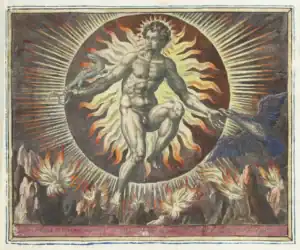
Pyrrho, from The History of Philosophy (1655) | Thomas Stanley / Public domain
In 2025, I gave lectures and classes in Kyiv, Ukraine, and at two Palestinian universities in the occupied West Bank.
I have lived a tame life, and these were relatively intense experiences for me.
As I had anticipated, Kyiv was heavily bombed while I visited, and I taught in a bomb shelter. In the Balata refugee camp in the West Bank—a zone of intensely concentrated poverty—I watched children literally playing with fire in the darkness, carrying burning garbage to build a make-believe lethal trap for the Israeli soldiers who frequently raid the camp later at night. Many of the walls are plastered with the photographs and names of armed young men (five to ten years older than the kids on the street) who have been killed.
I was invited to visit these universities by people who thought that their students might benefit from connections with a senior American academic. My best moment was when I demystified American financial aid for 65 Palestinian undergraduates who showed up to have office hours with me.
I offered a lecture in each location on a philosophical theme: how to think about happiness. This theme was my idea, but my hosts seemed to welcome it.
My own philosophical view tends toward skepticism, the kind that originated with the ancient Greeks’ skeptical school, then found an eloquent proponent in Michel de Montaigne (1533–1592), and has inspired such recent authors as Stanley Cavell (1926–2018). A phrase of Montaigne’s captures the central idea of this tradition: “The plague of man is the opinion that he knows.” (L’opinion de sçavoir.) In Kyiv and in Bethlehem—both home to intense beliefs—I defended Montaigne’s stance.
Skeptics in this tradition note that we are biased to think our own beliefs are more reliable than they are. We tend to cling to our beliefs as if they were something valuable, or as if our value as human beings depended on our beliefs being right and other people agreeing with us. Our egos get involved. Besides, our beliefs do not reliably result in action.
But surely it is even worse to avoid beliefs. Opponents worry that skepticism provides an excuse not to act when action is required.
Writing in exile from Nazi Germany in 1938, the radical social critic Max Horkheimer called skepticism “a pathological form of intellectual independence.” Skeptics strive to free themselves of all beliefs. But, Horkheimer wrote, we need “not just any old ideas but the true ones,” ideas that lead to a “better future.” He thought that by striving to escape from all beliefs, skeptics evade “truth as well as untruth.”
Horkheimer acknowledged that Montaigne was a compassionate man, perceptive about injustice (for instance, Montaigne “saw through [the] sadomasochism” of religious zealotry) and capable of “courage and solidarity with the oppressed.” But it bothered Horkheimer that Montaigne did not base these attitudes on beliefs. He dismissed Montaigne’s feelings of obligation to others as “simply a matter of taste.”
I think that Horkheimer missed the compulsion that Montaigne felt to be compassionate. Compassion and obligation did not feel to Montaigne like matters of taste; they arose from his close attention to other people and animals.
Skeptics contend that the world that we consider objective is contingent on whatever senses, values, and reasoning powers we happen to have. A different creature must inhabit a different world. A skeptical practice is to reflect deeply on how things might seem if one were a different person, the same person in a different mood, or a different animal altogether.
Close attention reinforces skepticism about general matters, such as the purpose of life. It also allows us to understand just a bit about how other creatures think and feel. Such compassion can spur action on their behalf.
For instance, we might think about the octopus, an intelligent and sensitive animal without a brain. Its complex nervous system is distributed through its body, and its arms have considerable autonomy. The philosopher Peter Godfrey-Smith writes, “Octopuses [may] not even track where their own arms might be.” Nevertheless, each octopus functions as a coherent organism with an individual personality.
I think of myself as one thing, my body parts as something slightly different (because I control them imperfectly), and the external world as something distinct from both my self and my body. This experience deeply influences my assumptions about fundamentals like self and other, thought and matter, cause and effect, intention, and the objective world. It is hard to believe that an octopus feels the same way, yet my experience is no more valid or true.
This kind of skepticism does not imply doubt about scientific knowledge. On the contrary, as the sociologist Robert K. Merton argued in 1942, science is “organized skepticism.” When it works as advertised, science generates knowledge (about octopuses and many other things) by constantly scrutinizing each claim. The results of science accumulate as a public resource—the information collected in libraries, databases, and online—that vastly exceeds anyone’s capacity to grasp individually.
The problem that concerns me (and Montaigne) is not such knowledge but our individual beliefs, and especially our tendency to overvalue our own beliefs about things like the good life or the good society. When we imagine that acting well requires correct moral beliefs, our ideas can become dogmas.
Skepticism sounds similar to mistrust. It could imply that we should be careful about other people—perhaps even reluctant to demonstrate love. Cavell argued the opposite. He said that we shouldn’t need reasons to love other people. Beliefs can serve as excuses to avoid love; skepticism counters those excuses.
In Bethlehem, I said, “This room is full of ordinary objects with functions and features that I can understand. I can apply knowledge to understand how the computer works or what is outside the window. The room also contains human faces. Each face makes a demand on me, that I be ethical to that person. That comes before any belief and is vastly more important than any belief.”
It would be an exaggeration to say that my talk went over badly. A professional photographer recorded the listeners’ expressions, and I had an opportunity to get to know several of them during the subsequent conversation. At least some appeared engaged and reasonably satisfied. The photos depict smiles. However, I did hear explicit criticism, and it made sense to me.
At least one questioner thought that a visitor who knows things—a purported expert—should share some of his knowledge. Otherwise, students would be better off attending their regular classes. To ask them to instruct me about their experiences might demand emotionally taxing work from them, when I should strive to be helpful. My failure to take detailed positions on political issues might seem like a problematic form of neutrality. That concern particularly arose when I refused to answer precise questions about the cause of the war in Gaza, on the basis that I did not know. (In fact, I do not know.) Perhaps I appeared to seek praise or gratitude for traveling to the West Bank, although my journey was not a significant sacrifice.
Skepticism emphasizes that our beliefs are contingent on who we happen to be. That is the case for everyone. But I now realize that the lessons we derive from skepticism also depend on who we are. People like US philosophy professors should be especially concerned that their own beliefs may be taken too seriously—by themselves and by others. Our task is to diminish the significance of our beliefs while remaining committed. However, people to whom no one has ever listened may need help and encouragement to express what they think.
My audience probably could not guess my privately tumultuous feelings. For instance, readers of Public Seminar might recognize the source of the idea that “faces” make unique ethical demands on us. This idea comes from Emmanuel Levinas, a Jewish thinker who has been accused of failing to extend his ethical concern to Palestinians (although some have rebutted that charge). My sense of my own identity had careened back and forth over the previous 48 hours as I had experienced a mild interrogation at Ben Gurion airport, met with friendly Israelis, ridden a Palestinian-owned bus through an open Israeli checkpoint, and felt at least some fear at the sight of armed Israeli settlers and installations bearing the Star of David. Nevertheless, I didn’t name Levinas in my talk, let alone discuss my identity as a partly Jewish American.
On one hand, I regretted not having the courage to discuss Levinas explicitly with a Palestinian audience, although I probably would have done so in the United States. On the other hand, I imagined that it would take more time and mutual trust before I could talk about this author helpfully in the West Bank.
Skeptical authors have wanted to help individuals become happier by avoiding dogmatic beliefs. I would not expect many people to find happiness in Kyiv or Nablus right now, although skepticism might help some to navigate injustice and violence with just a little more equanimity.
As for myself, I felt enough stress during both visits that I expected to experience relief or even joy on returning to my regular life in Massachusetts. Instead, I am haunted by the faces and scenes that I recall. But my memories just reinforce the point that skepticism isn’t a refuge from commitment. By setting aside abstract beliefs and focusing on specific people, we can make ourselves more vulnerable to compassion.