New York is the Place

How the city has defined The New School

The 1918 proposal to create a “new school” ended with a rousing declaration of the innovation of the idea, the significance of the moment, and, most of all, the importance of New York. The proposers believed that this city -- “the greatest social science laboratory in the world” -- would attract scholars ...
Read More
New York is the Place

When SPURA and Visual Urbanism Meet

An interview with Gabrielle Bendiner-Viani

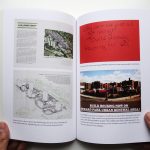
Contested City: Art and Public History as Mediation at New York’s Seward Park Urban Renewal Area, a new book by Gabrielle Bendiner-Viani, charts the long, dispiriting, and complicated history of the Seward Park Urban Renewal Area (SPURA) on the Lower East Side of New York. Over five years, Bendiner-Viani walked ...
Read More
When SPURA and Visual Urbanism Meet

What Does It Mean to Educate Adults?

The Case of the New School

There is much in question about the future of higher education, but one trend is clear: the average age of undergraduates is rising. As a college degree replaces a high school degree as the basis for more jobs and the possibility of economic stability, more people are starting or returning ...
Read More
What Does It Mean to Educate Adults?

The Majority Finds Its School

The lessons of Gerda Lerner

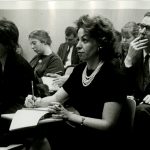
In the fall of 1962, Gerda Lerner offered a pioneering course in women’s history at the New School, titled “Great Women in American History.” Such a course may have occurred at Radcliffe College in the 1930s, and perhaps at other women’s colleges, but Lerner’s course at the New School was ...
Read More
The Majority Finds Its School

New School Histories Vertical

Announcing a new vertical for Public Seminar

Editors: Mark Larrimore and Julia Foulkes A school for the present. In 1918, the New Republic-based creators of what would become the New School for Social Research* called for a re-thinking of what higher education could be. Universities were hamstrung by backward-looking legacies and structures, both institutional and intellectual. Education needed to ...
Read More
New School Histories Vertical

On James Baldwin and The New School

What It Means to be a Progressive University

And it is the local experts who field questions about Baldwin. The most recent request was from the university’s marketing and communications department to confirm that he had, in fact, been a student. The Baldwin estate had agreed that the university could quote him on its website but the estate ...
Read More
Placeholder

Two Opposing Responses

Trump year 1

My response to the 2017 election has traveled in two opposite directions. The inevitable one was to commit to more political action. So, yes, handmade signs made for marches are piling up in my home – I have one that’s of a melting Earth on an ice cream cone; others ...
Read More
Placeholder

Creating City People, Not Just Maintaining Buildings

New York City’s Cultural Plan

Last week the city released its much-awaited cultural plan. The Department of Cultural Affairs undertook an unprecedented year-long process of surveying New Yorkers about arts and culture in New York, about what worked and what did not in the city’s creative life. Not surprisingly, equity and inclusion were repeated refrains: ...
Read More
Creating City People, Not Just Maintaining Buildings

Homesteading the Lower East Side

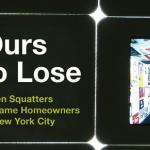
A Review of Amy Starecheski, Ours to Lose

Amy Starecheski, Ours to Lose: When Squatters Became Homeowners in New York City (University of Chicago Press, 2016) The Lower East Side has long been an object of fascination for those who study New York. It has been a location for bohemia, from the early 20th century to the Beats and ...
Read More
Homesteading the Lower East Side

Seeing Rikers, Closing Rikers

Making Incarceration Visible

A year ago the New School hosted the opening of States of Incarceration, an exhibition created by hundreds of students and people directly affected by incarceration. Organized through the Humanities Action Lab, a consortium of 20 universities, the exhibition details the history of imprisonment in the U.S by a close ...
Read More
Seeing Rikers, Closing Rikers

Fighting Over and On the Streets of New York

A Review of the ‘Whose Streets? Our Streets!’ Exhibition

“Whose Streets” features the work of thirty-eight independent photojournalists who documented -- and participated in -- protests in New York from 1980-2000. The issues ranged from housing, abortion rights, housing, queer activism, AIDS, education and labor, police brutality, race relations, the war and environment -- there were a lot, and ...
Read More
Placeholder