O.O.P.S. vs M.O.O.C.s: Midterm Report, Part 1
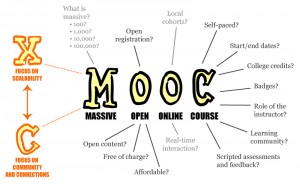
“The proponents of M.O.O.C.s (Massive Open Online Courses) look for the magic bullet, hoping to find a technological solution to the crisis in education. The O.O.P.S. (Open Online Public Seminar) project is to use the new technology, the potential of the web, to extend education’s promise.”
With these words, I closed ...
Andrew Ross
I was not surprised to learn that Andrew Ross, professor of American studies at NYU, had been barred from entering the United Arab Emirates. I have known Andrew for quite a few years, and know him to be a persistent and consistent critic of injustice and exploitation. Much of his ...
Arendt’s Plurology
The sociologist reading Hannah Arendt's The Human Condition is bound to squint at the page in puzzlement when Arendt gives her definition of society. So would, I think, most readers of the text. Arendt’s fondness for assigning new meanings to commonly used words is most perfectly demonstrated in that ...
Hannah and Me: Understanding Politics in Dark Times
Contrary to the suggestion of my informal title, I did not study with Hannah Arendt, nor were we ever colleagues, although I missed both experiences only by a bit. I was a graduate student in the early 1970s in one of the universities where she last taught, the University of ...
Ambiguity, Ambivalence, and the Social Condition and Politics: Thoughts Following our Third Session
The Social Condition
OOPS versus MOOCs
I first thought of writing this post over a year ago as a follow up to my piece “Against the Educational Uncertainty Principle.” I was struck by the way that recent interventions to address the various dimensions of higher educational crisis have made matters worse. MOOCs, Massive Open Online ...
The Social Condition and the Ghetto
Jeffrey Goldfarb and Iddo Tavory (recently joined additionally by Tim Rosenkranz) have been trading pieces in this forum toward sketching the outlines of an existential sociology based on a concept they call "the social condition." The social condition, if I understand them correctly, is the intrinsic potential for ...
Neoliberalism and the Feminine Subject*
Foucault’s radical intervention in feminist theory, and more generally in the philosophy of the body, has been the crucial claim that any analysis of embodiment must recognise: how power relations are constitutive of the embodied subjects involved in them. His studies of disciplinary technologies, for example, show how individuals are ...
A Continuing Conversation: From the Archiv to Social Research
The Graduate Faculty of the New School for Social Research was founded in 1933 by Alvin Johnson, the president of the New School, who created there the “University in Exile” to provide a safe haven for scholars who were endangered by totalitarian regimes.[1] The University in Exile became necessary after ...