The Implications of March 7, 1965

The history of Bloody Sunday and where we stand today

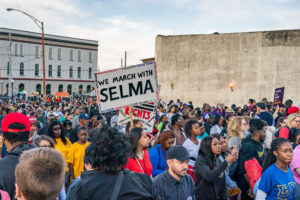
The story of March 7, 1965, in Selma is the story of Americans determined to bring to life the principle articulated in the Declaration of Independence that a government’s claim to authority comes from the consent of the governed....

Read More
The Implications of March 7, 1965

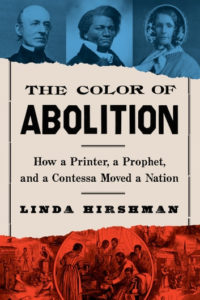
The Color of Abolition

Linda Hirshman introduces her new book on Frederick Douglass, William Lloyd Garrison, and Maria Weston Chapman

I was looking for the mechanics of activism—the meetings, the speeches, the broadsides, the litigation—for my analysis. And Garrison and Douglass were both central to the mechanics of activism. Their alliance fueled critical years of the movement, and their breakup affected the direction of the movement profoundly. This was the ...
Read More
The Color of Abolition

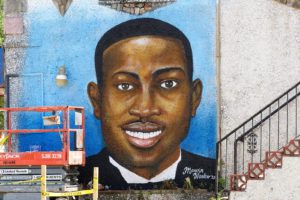
There’s a Black Man Running Down My Street

When nice white neighbors criminalize a man for being Black and kill him it’s not just murder—it’s a lynching.

When is a murder not a murder? When it’s a lynching. On November 24, 2021—the day before Thanksgiving—many Americans let out a collective breath of relief. In Brunswick, Georgia, a jury convicted Travis McMichael, his father Gregory McMichael, and William Bryan of murder for hunting down and killing Ahmaud Arbery, an ...
Read More
There’s a Black Man Running Down My Street

Can We Talk about Race?

An award-winning journalist says yes—it isn’t easy, but everyone can learn to do it

Celeste Headlee, an award-winning journalist, professional speaker and author of We Need To Talk: How To Have Conversations That Matter (Harper Wave, 2018), and Do Nothing: How to Break Away from Overworking, Overdoing, and Underliving (Harmony, 2021) met (virtually) with Public Seminar editorial intern Gregory Coleman to discuss writing about the difficult conversations that need to happen ...
Read More
Can We Talk about Race?

Speaking of Race

In an excerpt from her forthcoming book, Celeste Headlee shows how two determined friends opened a white supremacist’s mind

First is the story of Derek Black, godson of David Duke (former grand wizard of the KKK) and son of Don Black, who founded the neo-Nazi online forum Stormfront in 1996. Derek was raised in a tradition of hate and became a true believer in the white nationalist cause. Then ...
Read More
Speaking of Race

A Pencil For Your Land

Ngũgĩ and Achebe on colonial public school

_____ Oppressed people who retaliate are up against the privileged and powerful. Fighting back often places them outside the system. But what happens when the suppressors’ tools are turned on themselves? Can a colonial education—the underhand offer of ‘a pencil for land’—be turned into an emancipatory counter movement? ‘Colonial mimicry’ describes a ...
Read More
A Pencil For Your Land

One Karen’s Perspective on Our Whitewashed History

The attacks on critical race theory are only the latest chapter in the American fight against equality and justice

_____ Not so very long ago, when we were children, my fellow white Gen Xers and I learned a whitewashed American history. That recent history can not only help explain white parents’ defensiveness about the teaching of race today, but also reveal the need for today’s children to learn basic concepts ...
Read More
One Karen’s Perspective on Our Whitewashed History

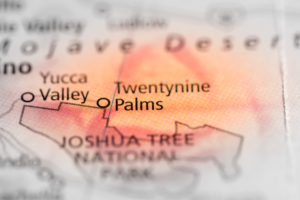
Murder, Marines, and the Mojave

On the 20th anniversary of its publication, author Deanne Stillman contemplates the repercussions of her much-discussed book, “Twentynine Palms”

_____ If you live in Southern California, odds are better than even that you’ve heard about Twentynine Palms. Deanne Stillman’s 2001 book examines the barbaric rape and murder of 15-year-old Mandi Scott and 20-year-old Rosalie Ortega in August 1991 by a Gulf War veteran. The murderer was stationed at the nearby ...
Read More
Murder, Marines, and the Mojave

When Saying “I’m Sorry” Is Not Enough

The anatomy of an apology

_____ An apology has an essential value.   it enables the apologizer, the perpetrator of a transgression, to reclaim its moral character in the aftermath of the transgression. By apologizing, the perpetrator is attempting to reclaim its humanity, its place in the community of civilized individuals or institutions. In a real sense, ...
Read More
When Saying “I’m Sorry” Is Not Enough

Guilty. Guilty. Guilty.

At last, a policeman is held accountable for murdering a Black American. But the process of imagining an end to lethal policing has only begun

_____ My greatest fear as I waited for the verdict in the George Floyd case yesterday was not that former Minneapolis police officer Derek Chauvin wasn’t going to be convicted of something. The prosecution had carefully left two back doors open for the jury, alternative charges that would have allowed the ...
Read More
Guilty. Guilty. Guilty.

Why the Howling That New York’s Private Schools Have Been Taken Over By Critical Race Theory?

Claims that children are being harmed are a thin cover for returning to a world where white people don’t have to feel bad about racism

Late last week, Paul Rossi, a member of the mathematics faculty at Grace Church School in lower Manhattan, denounced the social justice and anti-racism program instituted by the school in 2020. Before writing this essay, published on Bari Weiss’s contrarian Substack, Common Sense, Rossi was already in hot water. By ...
Read More
Why the Howling That New York’s Private Schools Have Been Taken Over By Critical Race Theory?

When Welfare Was a Route to Community Empowerment in Las Vegas

In 1971, Black women workers seized control of their own destiny—and won

_____ This month, Congress passed, and President Joe Biden signed, a bill that seeks to address longstanding economic, educational, local government and health care needs that have become desperate during the pandemic. Even though it was missing key elements – a $15 federal minimum wage, and a lower cutoff for eligibility ...
Read More
When Welfare Was a Route to Community Empowerment in Las Vegas