What Does It Mean to Be “Authentic”?

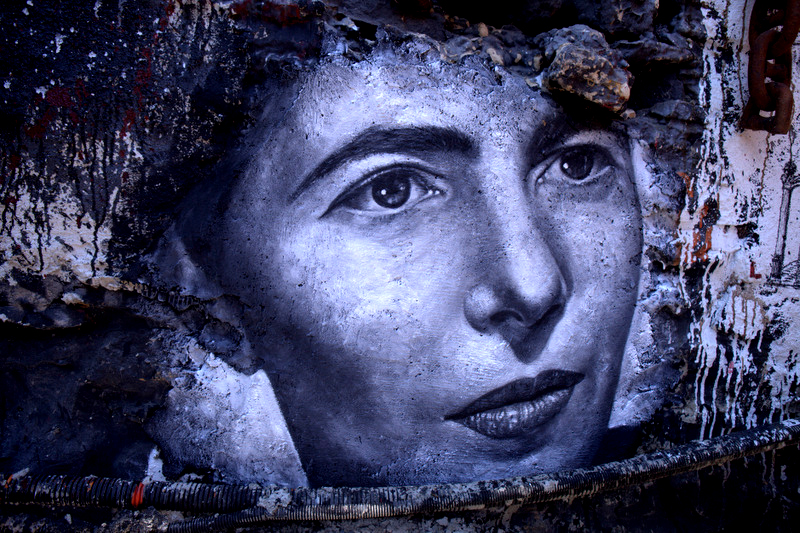
Skye C. Cleary chats with Luis Jaramillo about her new book on Simone de Beauvoir’s philosophy-from-life method

Finding your “authentic self” is often taken to mean: “Let’s turn inward and look for the blueprint that’s going to tell us what decisions we should make and that will make us happy.” But Beauvoir argued that we’re humans who are always growing, always changing....

Read More
What Does It Mean to Be “Authentic”?

Pasolini: Sexting the World

His original and perceptive theory of neo-capitalism came from direct engagement with the problems of making a postwar, post-Fascist culture. His commitment to the Grand Old Cause of the people was both moral but also erotic, even carnal. He wanted – needed – to cock-suck the world. Such was his ...
Read More
Placeholder

From Metaphyiscs to Meatphysics

The mark of a major body of work is that it will support more than one interpretation, all of which are coherent and persuasive, and each of which is open-ended enough for further elaboration. So it is with Marx. But at least one possible path of interpretation and elaboration seems ...
Read More
Placeholder

Franco ‘Bifo’ Berardi

Where Mario Tronti and Antonio Negri were born in the 30s, Berardi (1948) belongs with Paolo Virno (1952) and Silvia Federici (1942) to a second wave of Italian Marxist thinkers who grew out of the workerist current that struck out on its own path, diverging from the official Gramscian postures of the ...
Read More
Placeholder

Virno and History

He could have been talking about something that goes by many names in Paolo Virno’s Déjà Vu and the End of History, (Verso Futures, 2015). Sometimes Virno calls it potential, or the virtual, or memory, or faculty, or disposition, or even labor-power. This unquenchable fire is for Virno the source ...
Read More
Placeholder

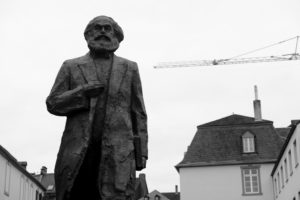
Marx and Nature

"What Engels called “the monopolization of the earth by a few” has reached absurdist proportions as I was writing this. (60) It would appear that the 1% now own more than half the wealth of the planet. It is the greatest concentration of wealth ever, and yet it corresponds to ...
Read More
Marx and Nature

Notes on Zizek’s Absolute Recoil (2)

When ever Marxists lift their attention from vulgar matters and start creating theories of the subject, it is always the bourgeois subject that seems to need theorizing. Perhaps there is no other kind. Althusser illustrates his theory of ideology with an anecdote about being hailed in the street by a cop: ...
Read More
Notes on Zizek’s Absolute Recoil (2)

Spinoza on Speed

Michael Hardt and Antonio Negri’s, Empire (Harvard University Press, Cambridge MA, 2000) is a book I have always been ambivalent about. It is a kind of Spinozist-accelerationist epic. (As Benjamin Noys has usefully shown). Spinoza on speed. I admire the boldness with which it attempted to describe the situation that was ...
Read More
Spinoza on Speed

The Drone of Minerva

The one kind of speculative thought that might be of service in the Anthropocene is surely some kind of philosophy of history, and yet within the academy itself it seems the one nobody wants to actually attempt. It is as if the debates at the end of the last century ...
Read More
The Drone of Minerva

Can Anyone Even Remember Postmodernism?

If one teaches the ‘postmodern’ moment to today’s students, it is worth remembering that when pomo was a big deal, they had probably not even been born. If ‘retro’ was one of the characteristic style moves of pomo, then there is now even retro-pomo, a kind of meta-retro, or meta-pomo, ...
Read More
Can Anyone Even Remember Postmodernism?