Curzio Malaparte’s War

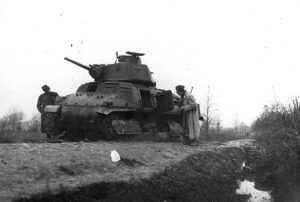
The notorious war correspondent wanted to show us a civil war between different modes of industrialized modernity

Two of the most shocking books about World War II were written by the Italian fascist litterateur and dandy Curzio Malaparte. His “novels” Kaputt and The Skin have been canonized through incorporation into the wonderful series of New York Review Classics. They are hailed by luminaries like Milan Kundera, Gary ...
Read More
Curzio Malaparte’s War

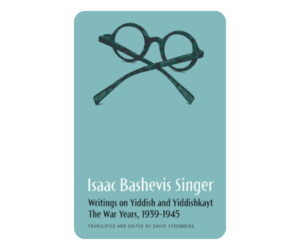
The Hope and Humor of Isaac Bashevis Singer’s Early Essays

A timely review of Writings on Yiddish and Yiddishkayt: The War Years, 1939–1945

Helen Schulman's review explores Bashevis Singer's "Writings on Yiddish and Yiddishkayt, The War Years, 1939-1945." The piece highlights Singer's poignant essays, written during World War II, offering a glimpse into his reactions to Nazi atrocities and the erosion of Yiddish culture, and drawing connections to the current Israeli-Palestinian conflict. ...

Read More
The Hope and Humor of Isaac Bashevis Singer’s Early Essays

Leading the Resistance Into Battle

An Interview With Sonia Purnell

The following interview with Sonia Purnell, a 2020 finalist in biography, is part of a series of NBCC interviews conducted by New School creative writing students. In her biography, A Woman of No Importance: The Untold Story of the American Spy Who Helped Win World War II, Sonia Purnell captures the ...
Read More
Leading the Resistance Into Battle

Thou Shalt Not Be Indifferent

--- Dear friends, I am one of the few still alive of those who remained in this place almost until the very last moment before liberation. My so-called evacuation from Auschwitz began on the 18th of January. Over the next six and a half days it would prove a death march ...
Read More
Thou Shalt Not Be Indifferent

Saving America’s Cities

Re-evaluating the complex history of urban renewal

Too often the era of urban renewal is depicted as an abstract contest between unstoppable urban-growth machines and the defenseless communities that became their victims. Following the career of someone like Logue allows us to grapple with the agency, motives, and constraints on all sides and, most importantly, to understand ...
Read More
Placeholder

Collective Amnesia in Post-Communist Poland

Why history, not memory or mythology, is the path to Polish-Jewish reconciliation

After WWII, many European countries engaged in what some scholars dubbed “collective amnesia.” Austria, for example, began to redefine itself as the first victim of the Nazis. France amplified the Resistance, forgetting about its Vichy days; Western Germany, after the trials of several high-profile Nazi leaders, allowed for silence to ...
Read More
Placeholder

A Multi-Campus University in Exile

Then and now

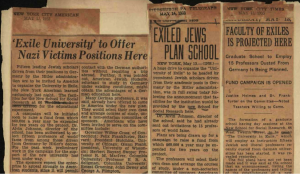
The New School opened on February 10, 1919 in the name of academic freedom -- a cause it heroically defended a second time when Hitler rose to power. In April 1933, Alvin Johnson, the New School’s director, called on American intellectuals to protest the dismissal of hundreds of professors in ...
Read More
A Multi-Campus University in Exile

“Bread in those days was like gold!”

A survivor’s account of the Siege of Leningrad

The Blockade of Leningrad is a particularly dark period in modern history. Almost anyone who has family ties in the city will know someone directly affected by it. My great uncle was among those who survived the blockade – aged only six when it began. Hearing his account of events ...
Read More
“Bread in those days was like gold!”

The Story of the “Good War” Must Change

Seeing WWII as an American triumph prevents understanding Russia and Europe today

In his recent trip to Europe, President Donald Trump criticized NATO, expressed a willingness to accept Russian annexation of Crimea -- calling it a Russian-speaking area -- and failed to challenge Vladimir Putin's support of separatists in eastern Ukraine where 10,000 people have died and a civilian airliner was shot ...
Read More
The Story of the “Good War” Must Change