When Texans Were Socialist Revolutionaries

On David Griscom’s new book, The Myth of Red Texas

For the past 50 years, Texas has been a GOP stronghold. Despite the good efforts of figures such as Beto O’Rourke, Barbara Jordan, and Ann Richards, the state has remained firmly in the grip of big business, big oil, and a conservative legislature. But as David Griscom observes in his new book, The Myth of ...
Read More
When Texans Were Socialist Revolutionaries

Before Social Media, There Were Postcards

On the first modern media event in fin-de-siècle France

In October 1899, Parisians could purchase a large color lithograph depicting a grotesque human-pig hybrid, complete with spectacles and a curly tail, wielding a paintbrush and smearing a map of France with this brown “caca international”—“international poo." The picture was a caricature of the novelist Émile Zola, or “Le roi ...
Read More
Before Social Media, There Were Postcards

The Waning of the American Illusion

And the virtues of democratic idealism

Was Ronald Reagan’s famous image of America as a “shining city on a hill” truly just an illusion, a Fata Morgana of the United States as a beacon of democracy, freedom, and moral leadership, a trick played on the world’s collective mind?  In a podcast aired on January 14, 2026, Tucker ...
Read More
The Waning of the American Illusion

The Avant-Garde Intersection of Léon-Paul Fargue and Marie Monnier

Translating the “great nocturnal butterflies in broad daylight” of one modernist recognizing another

Translator’s Note In May 1927, an exhibition of images embroidered in silk thread opened at La Maison des Amis des Livres in the Sixth Arrondissement, the bookshop and salon that Breton once called “the most attractive hub of ideas of the time.” The artworks were the creations of Marie Monnier (1894–1976) ...
Read More
The Avant-Garde Intersection of Léon-Paul Fargue and Marie Monnier

Portsmouth, Displacement, and Belonging in The Tears of Other People

A conversation with author E. M. Ippolito about the settler colonialist roots of modern displacement and urban renewal

E. M. Ippolito’s relationship to her hometown of Portsmouth, New Hampshire, is a complicated one. While Ippolito’s exploration of Portsmouth’s working-class history began when she was a college student, it was her own displacement from Portsmouth that personalized her research. Learning the story of Portsmouth’s 1960s urban renewal—a federally funded ...
Read More
Portsmouth, Displacement, and Belonging in The Tears of Other People

Honest Truths From Wrongful Deaths

In an excerpt from Our Grief Is Not a Cry for War: The Movement to Stop the War on Terror, the author surveys how left-wing intellectuals responded to 9/11

The first war the United States fought following 9/11, I argue, was a “war of interpretation” over the root causes and deep meaning of the attacks themselves. Below is a section from the first chapter of Our Grief Is Not a Cry for War (University of Chicago Press, 2025), in ...
Read More
Honest Truths From Wrongful Deaths

Goldbugs

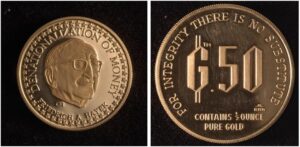
An excerpt from Hayek’s Bastards: Race, Gold, IQ, and the Capitalism of the Far Right

People make bad money, and that money makes bad people.— Peter Boehringer Monetary issues have long divided neoliberals. Can you trust a central bank to manage currency? Can the growth of the money supply be made automatic? Should fixed or floating rates reign in global currency markets? Must money be backed ...
Read More
Goldbugs

Frantz Fanon and Africa’s Postcolonial Predicament

A plea for a blank slate and a new beginning

Of all the ways Frantz Fanon has been misinterpreted, none is more persistent or consequential than the misunderstanding of his theory of violence. His reflections, especially as represented in The Wretched of the Earth, have drawn intense debate and condemnation, particularly from liberal and post-Enlightenment humanist circles.  Among his most notable ...
Read More
Frantz Fanon and Africa’s Postcolonial Predicament

Judah Magnes: Binationalism as Political Theology

A reminder of a sacred myth

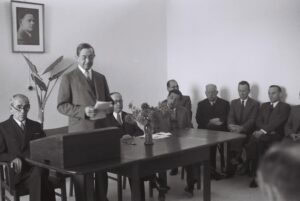
Judah Magnes, rabbi, orator, pacifist, and founding Chancellor of the Hebrew University, has long haunted the political margins of Israeli and Palestinian history. Too Zionist for the anti-statist left, too pacifist for the militarizing Yishuv, and too binational for a nation determined to consolidate, Magnes occupies a strange position in ...
Read More
Judah Magnes: Binationalism as Political Theology

Bruno Schulz’s Poetics of Golus

On the Polish language as a medium for diasporic modernism

For many readers, Bruno Schulz‘s interwar short story collections evoke the memory of Jewish life in Poland before the Holocaust. To Karen Underhill, Schulz’s stylistically innovative writing is also a movement through transient forms—the Polish language and childhood experiences in interwar Poland—into the exegetical “margins” of Jewish tradition." Recently, Underhill ...
Read More
Bruno Schulz’s Poetics of Golus