Why Does White Fragility Never Break?

The Framing of Racism in Higher Education

------ When I was a graduate student at Emory University in 2018, the law school suspended a professor, Paul Zwier, for using the N-word in class. Zwier’s response to the suspension was strange. Inside Higher Ed reported on a letter in which he said, “I’m not sure whether I used the ...
Read More
Why Does White Fragility Never Break?

COVID-19 Mirror on the Wall—Who’s the Bravest College of Them All?

Moving online and volunteering for vaccine trials this Fall requires a more prudent courage than reopening college campuses for classes and football

––––––– The next time you check the COVID-19 dashboard of your favorite university on your laptop screen, imagine asking: Who’s the bravest of them all? Pretend you’re like the Evil Queen in Snow White, who gazes in a mirror, asking who is the fairest of them all, in order to eliminate ...
Read More
COVID-19 Mirror on the Wall—Who’s the Bravest College of Them All?

Realizing The New School

A downloadable collection of essays documents lessons from the past as a university looks to its future

A century later, the experiment has become an institution, one different in almost every way from the one originally proposed. Psychology and the arts quickly redefined what “social research” could be. The Encyclopaedia of the Social Sciences and the rise of fascism inspired The New School’s president to establish a ...
Read More
Realizing The New School

Can We Talk About Sex? Please?

A review of Jennifer Hirsch’s and Shamus Khan’s Sexual Citizens: A Landmark Study of Sex, Power, and Assault on Campus

------------- A decade ago, I was a resident adviser in a residential college at a highly selective university. My colleagues and I used to roll our eyes at the highly legalistic "affirmative consent" model of sexual education that we were asked to teach first-year students. Focused on the idea that sexual ...
Read More
Can We Talk About Sex? Please?

What Does a Virtual Conference Look Like?

Scholars have been grousing about the expense of annual meetings for years. The pandemic is our opportunity to imagine change

----------- Why do we conference? Scholarship, dialogue, and community are all good answers to that question. But as the Covid-19 pandemic remapped our lives and shuttered American institutions last spring, the Society of United States Intellectual History (S-USIH) took stock of our annual meeting plans. Suddenly, answering that question became urgent. We had set ...
Read More
What Does a Virtual Conference Look Like?

Good History Makes the Familiar Strange to Us

Why The 1619 curriculum belongs in our schools

It is almost a foregone conclusion that when new circumstances, and new evidence, force us to evaluate a consensus view of the American past, new and public conflicts erupt. As a history educator, I have seen this all before.  As the culture wars ramped up after 1992, the attempt to craft ...
Read More
Good History Makes the Familiar Strange to Us

The Pandemic Has Revealed the Driving Values of American Higher Education

Universities like UNC are going online for the public good, while other universities persist in reopening for perceived prestige and elite branding

Yet despite the rapidly escalating numbers of COVID-19 cases on campus, this elite private Catholic research university has kept its undergraduates in the dormitories at full capacity, and expressed its intention to reopen its campus again by Labor Day weekend for in-person classes, work, and other activities including Division I ...
Read More
The Pandemic Has Revealed the Driving Values of American Higher Education

Don’t Let Campuses Become Plague Dystopias

College and university presidents should have the courage to halt their reopening

In late May, the President of Notre Dame and Thomist philosopher Fr. John I. Jenkins defended his decision to reopen its campus in terms of the university’s religious and moral values, including the virtue of having soldierly “courage” in the face of death. This, he insisted, was a virtuous Aristotelian “mean” between ...
Read More
Don’t Let Campuses Become Plague Dystopias

The Enigma of Rescue

On a recent history of The New School for Social Research

The New School for Social Research holds a story of rescue dear. This is the tale of how its co-founder and first president, the economist Alvin Johnson, climbed a mountain of correspondence and paperwork to save scores of German scholars after Nazism’s rise to power in the early 1930s. Johnson ...
Read More
The Enigma of Rescue

The Happy Talk of Diversity

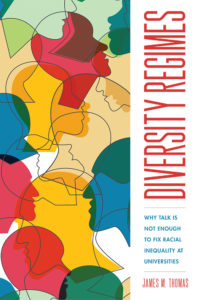
How can American colleges affect real change?

Scholars who study diversity find that among ordinary actors, it has multiple and contested meanings. For many, diversity is enriching. The idea of people from dif­ferent backgrounds coming together through shared values and working toward shared goals fits well with the ethos of America as a melting pot. Sociologists Douglas ...
Read More
The Happy Talk of Diversity

On Our Revolutionary Moment

Putting today’s revolt against institutional racism into historical context

Protestors, who had been staging increasingly violent strikes, had assailed City College, CUNY’s flagship school, located in the middle of Harlem, as a racist institution that used academic standards to deny admission to all but a handful of Black and Puerto Rican students. They demanded that CUNY abandon those standards ...
Read More
On Our Revolutionary Moment

Albert Mayer’s Urban Village: Between The New School and India

A global conversation about using design to foster community

The New School does not look like most other universities, even those in large cities. It has no college green around which buildings are situated; no common architectural style; no grand monument-like buildings with Latin phrases carved into granite. Instead, it is a disaggregated collection of buildings, most in the ...
Read More