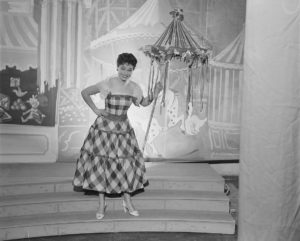
Making Experiences Our Own: A Review of The Amen Corner, 2021

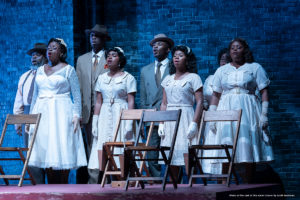
For years, Ijeoma N. Njaka was afraid of failing to understand James Baldwin. Then she went to see his play

It is by no means guaranteed that a potential audience member will automatically make a connection between their life experiences, interests, knowledge, emotions, or memories with a piece of art. Interpretive or educational materials, however, can help a viewer create a personally meaningful connection with the art itself....

Read More
Making Experiences Our Own: A Review of <em>The Amen Corner</em>, 2021

Introducing the Latest Issue of James Baldwin Review

Honoring Baldwin’s legacy in a new volume of academic research, criticism, and personal essays

As we continue to bring together a mixture of scholarship, reviews, and reflections—from a variety of voices—it is our humble aim to continue to grow our readership and expand the legacy and impact of our namesake author’s moving works and searing insights. ...

Read More
Introducing the Latest Issue of <em>James Baldwin Review</em>

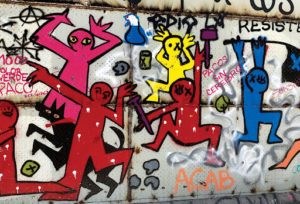
Turning Art into a Political Weapon

Scholars Terri Gordon-Zolov and Eric Zolov discuss the aesthetics and significance of the Chilean estallido

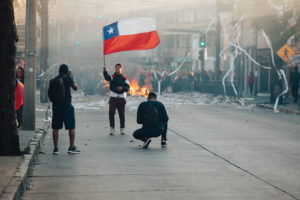
Wearing protest iconography was also a way to support the movement. And it was potentially risky. You could wear a handkerchief to cover your eyes from tear gas or to make yourself more anonymous or you could wear a green scarf to support reproductive rights. ...

Read More
Turning Art into a Political Weapon

The Walls of Santiago

How the Joker and Pikachu become symbols of the Chilean social uprising, in an excerpt from Terri Gordon-Zolov and Eric Zolov’s new book

Humor provided a powerful weapon in the fight to topple the civic-military dictatorship. The radical deprivation of human rights during the Pinochet regime had secondary costs, among which were the loss of a sense of freedom, spontaneity, and overall well-being. ...

Read More
The Walls of Santiago

How We Remember Leads Us to What We Remember

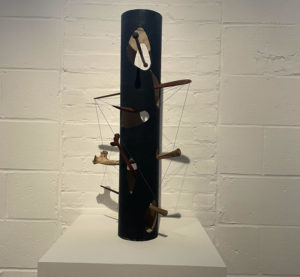
A review of the Noguchi Museum’s “No Monument” exhibit

No Monument, contained within one and a half rooms on the first floor of the Noguchi Museum complex, challenges institutional accounts of Japanese Americans detention—often illustrated using photographs of disconsolate families surrounded by a few remaining possessions—by celebrating personal expression in a time of hardship. ...

Read More
How We Remember Leads Us to What We Remember