Class, Hegemony, and the Will to End a Neighborhood

An excerpt from The Tears of Other People: A history and memoir of displacement in Portsmouth, New Hampshire

Why is it important to interpret Portsmouth's history of urban renewal as a history of class? So far, historians who have published work on the subject have chosen not to take this angle. All contemporary writing on Puddle Dock and the North End—the city's two neighborhoods destroyed by urban renewal—notes ...
Read More
Class, Hegemony, and the Will to End a Neighborhood

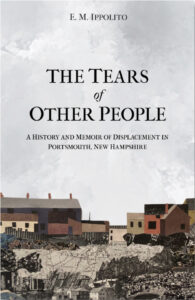
Portsmouth, Displacement, and Belonging in The Tears of Other People

A conversation with author E. M. Ippolito about the settler colonialist roots of modern displacement and urban renewal

E. M. Ippolito’s relationship to her hometown of Portsmouth, New Hampshire, is a complicated one. While Ippolito’s exploration of Portsmouth’s working-class history began when she was a college student, it was her own displacement from Portsmouth that personalized her research. Learning the story of Portsmouth’s 1960s urban renewal—a federally funded ...
Read More
Portsmouth, Displacement, and Belonging in The Tears of Other People

The Measurement of Loss

What do I take with me? How much can I carry when on foot?

The flight of the refugee is not, as I understand it, migration. Although the boundary can be fluid, not all those who risk their lives to cross the Mediterranean, for example, are refugees. The two must be differentiated to protect the refugee against the threat of terminological arbitrariness....

Read More