What Did Aristotle Think About Slavery?

Why we need to read great books closely

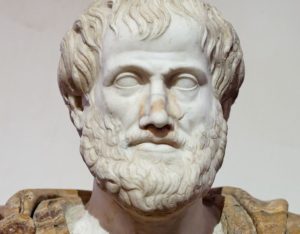
I admire Professor Collard’s attempt to defend Aristotle despite his views on slavery. My question is whether he actually held the views she attributes to him. We must avoid two common responses that seem to me misguided. The first is to reject Aristotle out of hand because his views do not ...
Read More
What Did Aristotle Think About Slavery?

Field Notes on “Sentencing the Present”

Diagnosing what is false without ceding what is beautiful

This is a final reflection by the curators of the seminar series “Sentencing the Present,” which was republished in full last week as “An Archive of a Crisis.” Because readers have asked us about the process and production of “Sentencing the Present,” when Public Seminar asked us to write a “post-mortem” ...
Read More
Field Notes on “Sentencing the Present”

Sentencing the Present: An Archive of a Crisis

Critical conversations in a time of crisis

A sentence is protean: It can describe, question, or cry out. A sentence is critical: In passing judgment, it names wrongs, makes decisions, and declares publicly. In a spirit of both open inquiry and political advocacy, and inspired by the response of readers to our own “Theses for Theory in ...
Read More
Sentencing the Present: An Archive of a Crisis

Sentencing the Present: Part Five

Critical conversations in a time of crisis

This is the final seminar of the "Sentencing the Present" series. For previous seminars, see part one, part two, part three and part four. A sentence is protean: It can describe, question, or cry out. A sentence is critical: In passing judgment, it names wrongs, makes decisions, and declares publicly. In ...
Read More
Sentencing the Present: Part Five

Sentencing the Present: Part Four

Critical conversations in a time of crisis

This seminar is part of an ongoing series. To read the previous issues in the "Sentencing the Present" series, see: part one, part two, and part three. A sentence is protean: It can describe, question, or cry out. A sentence is critical: In passing judgment, it names wrongs, makes decisions, ...
Read More
Sentencing the Present: Part Four

Sentencing the Present: Part Three

Critical conversations in a time of crisis

A sentence is protean: It can describe, question, or cry out. A sentence is critical: In passing judgment, it names wrongs, makes decisions, and declares publicly. In a spirit of both open inquiry and political advocacy, and inspired by the response of readers to our own “Theses for Theory in a ...
Read More
Sentencing the Present: Part Three

“How is it Going with Being?”

Some thoughts on Santiago Zabala’s Being at Large: Freedom in the Age of Alternative Facts

We are now hearing from a range of media pundits, social media figures, academics, and others, restating what has been painfully obvious: the crisis reveals (sigh, once again) the contradictions of global capitalism. There will no doubt be a great deal of reckoning in the wake of this crisis, which ...
Read More
“How is it Going with Being?”

Radical Hope Amid Catastrophe

When a collective culture is threatened with collapse, so are the reference points for defining a good life.

At a Christian Dior factory outside Paris, machines that once filled ornate vials with luxury fragrances are filling plastic bottles with hand sanitizer destined for public hospitals. Men and women who were dossing down on London’s streets have begun sleeping in rooms of the InterContinental Hotels Group after the city’s mayor negotiated a way ...
Read More
Radical Hope Amid Catastrophe

Sentencing the Present: Part Two

Critical conversations in a time of crisis

This seminar is part of an ongoing series. Read part one of "Sentencing the Present" here. A sentence is protean: It can describe, question, or cry out. A sentence is critical: In passing judgment, it names wrongs, makes decisions, and declares publicly. In a spirit of both open inquiry and political ...
Read More
Sentencing the Present: Part Two

There is No Future without Openness to the Other

To think the future in a time of pandemic, what do we require?

To speak of the void is to recall something of the timeless: that which does not dissipate, but which persists through the perpetuation of a lack, the endurance of a pressure that withstands no relief. The void, as a kind of pressure, pregnant with demand, is the source of a drive: a drive which ...
Read More
There is No Future without Openness to the Other

The Job of Critical Thinking Now

Protest offers a vision of the future that refuses mere recovery

As with those other fault-lines, the problem is not new, as François Hartog reminds us when he writes of “presentism.” Sometime in the twentieth century, we lost our belief in the redemptive power of history and so in the guarantee of a better future. Wendy Brown puts it succinctly: “We know ...
Read More
The Job of Critical Thinking Now

Sentencing the Present

Critical conversations in a time of crisis

In light of Marx’s 1843 conception of critical thought, how does your perspective contribute to “the self-clarification of the struggles and wishes of the age”? In a time of social breakdown and uncertainty, we find that critique comes almost too easily. Hence we also take inspiration from the historian E. ...
Read More
Sentencing the Present