Sing the Rage

Listening to Anger after Mass Violence

The words of Godfrey Xolile Yona, who appeared before the TRC in October 1996, exemplify the type of testimony that is the catalyst for my thinking about the significance of anger in testimony after mass violence and its relationship to restorative justice. Detained for his involvement with the anti-apartheid organization ...
Read More
Sing the Rage

The Meaning of July 4th for the Negro

A speech given at Rochester, New York, July 5, 1852

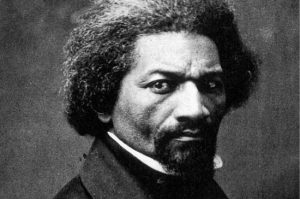
On July 5, 1852, abolitionist and self-emancipated slave Frederick Douglass delivered a critique of the Constitution of the United States to the nineteen members of Ladies Anti-Slavery Society of Rochester, New York and their guests. In this address, Douglass argued that the values of the Constitution existed in contradiction to the condition ...
Read More
The Meaning of July 4th for the Negro

Radical Skin/Moderate Masks

Yassir Morsi

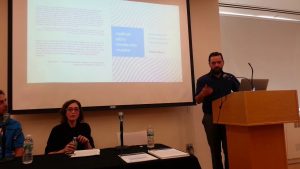
Pre-book launch event with Australia-based race critical scholar, Yassir Morsi in discussion with Arun Kundnani, author of 'The Muslims are Coming.' Co-hosted by the Zolberg Institute for Migration Studies and the Department Sociology at The New School. The event also launched the Rowman and Littlefield International Book Series, Challenging Migration Studies (edited ...
Read More
Radical Skin/Moderate Masks

Mayoral Statements on Confederate Memorials

Misrepresentation and Misrecognition, yet again (Part Two)

In this second part of further reflections on misrepresentation and misrecognition building on posts from earlier this year, I explore this rhetorical practice with reference to the current debate concerning the removal of statues of and to “Confederate heroes.” These debates have centered on the removal of four statues in ...
Read More
Mayoral Statements on Confederate Memorials

An Interview with Justin Leroy

Racial finance and the question of moral progress

On Wednesday, March 29th, Justin Leroy, an Assistant Professor at the University of California, Davis, delivered a presentation entitled “Race, Finance, and the Afterlife of Slavery,” as part of the 2017 Whitney Biennial, the seventy-eighth installment of the longest-running survey of American art. Leroy’s talk, which drew from an article ...
Read More
An Interview with Justin Leroy

Russia is Our Friend

The Alt-Right, Trump and the Transformation of the Republican Party

Looking behind recent events, there are troubling developments occurring behind the scenes underscoring how Donald Trump’s relationship to the Alt-Right is transforming the Republican Party. In more ways than one. There were already signs that the Republican Party had gone beyond dog-whistling about race to being the Party of white ...
Read More
Russia is Our Friend

Fame, Truth, and Justice

A Review of Raoul Peck’s I Am Not Your Negro

“…The general reaction to famous people who hold difficult opinions is that they can’t really mean it. It’s considered, generally, to be merely an astute way of attracting public attention, a way of making oneself interesting...”- James Baldwin, No Name in The Street James Baldwin was more than a writer and ...
Read More
Fame, Truth, and Justice

Escaping the Logic(s) of White Supremacy

The practice of oppositional thought

In her article “Indigeneity, Settler Colonialism, White Supremacy,” Andrea Smith advances the argument that there is no monolithic white supremacy. Rather, white supremacy should best be understood as a phenomenon “constituted by separate and distinct, but still interrelated, logics.” [1] She identifies three different racial schematics, corresponding to the different ...
Read More
Escaping the Logic(s) of White Supremacy

Football, Slavery, and Song

On Not Standing for the National Anthem

On August 14, 2016 during a pre-season game, San Francisco 49er quarterback Colin Kaepernick remained seated while his teammates stood for the National Anthem. At first it was unclear why he stayed on the bench. But a few weeks later, Kaepernick made his reasons known to journalists, linking the anthem ...
Read More
Football, Slavery, and Song

Interview with Dr. Kris Manjapra

On racial, gendered, colonial capitalism (the only kind of capitalism)

Cooper: I’d like to begin first by asking you to elaborate just a little bit more on your notion of Foucault and his thesis about repression and how it applies in your own work. Manjapra: Foucault was observing that in the 19th century there was a moment of discussion and talk ...
Read More
Interview with Dr. Kris Manjapra