What’s So Natural About Natural Medicine?

A historical exploration of natural medicine

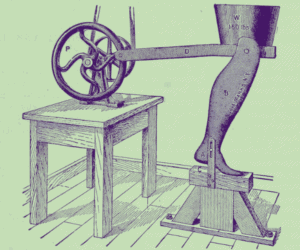
Susannah Meadows’ young son, Shepherd, was afflicted with juvenile idiopathic arthritis. Conventional drug treatments (naproxen and methotrexate) seemed to exacerbate his condition, but after regular doses of an ancient Chinese herbal remedy called “four-marvels powder,” his disease went into remission.[i] In 2013, the  New York Times Magazine published an article detailing Shepherd’s miraculous ...
Read More
What’s So Natural About Natural Medicine?

Mapping Climate Justice

Visualizing the Burden of Climate Stabilization

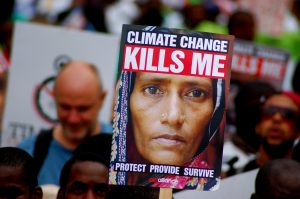
First, the principle of climate justice within a country. This means that, as each country moves toward accomplishing their climate justice goals, low- and high-income households should share the same burden proportional to their dispensable income as they do so. This principle can be realized through progressive carbon taxation. In ...
Read More

Financing the Transition to a Low-Carbon Economy

Report and Response

Once per semester, SCEPA sponsors an event relating to climate change policy and invites some of the most notable names in climate modeling and/or policymaking to give their perspectives on recent developments in climate change scholarship. This most recent event featured Dr. Nebojsa Nakicenovic and Dr. Paolo Galizzi. Dr. Nakicenovic, ...
Read More

Why Does a Historian Write a Memoir?

The adventures of a postmodern historian

Aurell shows that professional historians have produced some 450 works of autobiography or memoir, the bulk of them in the last few decades. "It is possible," he suggests, "that no other academic discipline can boast of such a high number of autobiographies written by its professionals." Perhaps, then, my work ...
Read More

For and Against the Anthropocene

A review of ‘Against the Anthropocene: Visual Culture and Environment Today’

Since the turn of the 21st century, many scientists have been arguing for the designation of a new epoch in Earth's geological history, which they term the Anthropocene in acknowledgment of the impact of humans on the planet's evolution. While not yet officially approved by the International Union of Geological ...
Read More
For and Against the Anthropocene

The Climate of Post-Truth Populism

Science vs. the People

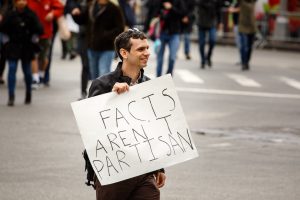
Has politics ever been about telling the truth? Recent declarations of the rise of a “post-truth” era irresistibly provoke this question. Declared the 2016 Word of the Year, “post-truth” describes “circumstances in which objective facts are less influential in shaping public opinion than appeals to emotion and personal belief.” One of ...
Read More
The Climate of Post-Truth Populism

Not Everything Political is Politics

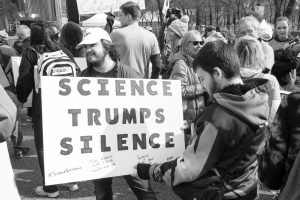
Reflection on the March for Science

Mark B. Brown is a professor in the Department of Political Science at California State University, Sacramento. He is the author of Science in Democracy: Expertise, Institutions, and Representation (MIT Press, 2009), as well as various publications on the politics of expertise, political representation, and climate change.
Read More
Not Everything Political is Politics

Global Climate and Trump

What does Trump Mean for Global Climate Change

“I just think we have much bigger risks. I mean I think we have militarily tremendous risks. I think we’re in tremendous peril. I think our biggest form of climate change we should worry about is nuclear weapons. The biggest risk to the world, to me -- I know President ...
Read More
Global Climate and Trump

A Geology of Media

On Jussi Parikka

The rabbit hole keeps going, becoming more of a mineshaft. For some the chemical and mineral dimension is also a big part of what appears when one looks behind the sign (Negarestani, Leslie, Kahn), which brings us to Jussi Parikka’s A Geology of Media (U. Minnesota Press, 2015). Which tunnels ...
Read More

Citizens of the Cognisphere

As we prepare a new generation of students for the computational regime (Brueck, 2016) we need to make room for cultural examination and critical reflection—not just to transcribe a liberal arts agenda in "an obligation to develop their abilities to think and live," (Deresiewicz, 2015) —but also to re-instill astonishment and ...
Read More

What Makes Something a Robot?

An Interview with John M. Jordan

Zed Adams: In your book, you point out that although it’s easy to identify instances of robots, it’s hard to give a general definition of what makes something a robot. This is intriguing, because it seems like we know what differentiates robots and, say, humans -- at least until we’re ...
Read More