What Could History Have Been?

Imagining new approaches to the humanities

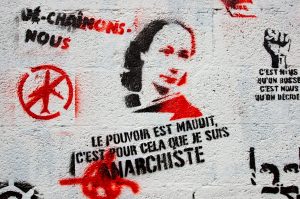
“What could history have been?” The question asks how events might have turned out otherwise, if only X had happened instead of Y. What if JFK hadn’t been assassinated? What if Hitler had? The official term for this kind of what-if thinking is “counterfactual history,” and it covers anything from ...

Read More
What Could History Have Been?

Virno on Human Nature

One of the central arguments of Paolo Virno’s book When Word Becomes Flesh (Semiotext(e), 2015) is that the conditions of possibility of experience can themselves be experienced. There are no transcendental conditions that are ‘out of the frame’ as it were.  The transcendental or ontological “are humbly placed within the world ...
Read More
Virno on Human Nature

Remembering Jerome Bruner

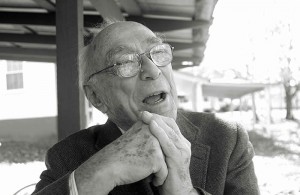
Jerome Bruner, the George Herbert Meade Professor of Psychology at the New School for Social Research from 1981 until 1991, died June 5th at the age of 100. Jerry spent his century engaged in life fully. Not only was he one of the most influential figures in psychology, ...

Read More
Remembering Jerome Bruner

Climate Policies After Paris

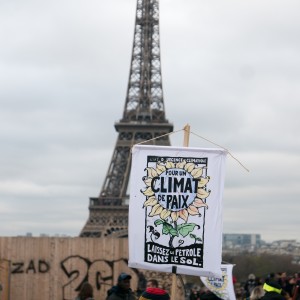
Toward the end of 2015, leaders from around the world convened in Paris for the latest round of international climate talks. This marks the 21st annual Conference of Parties of the United Nations Framework Convention on Climate Change. More than 40,000 people from over 150 countries attended the conference, representing ...

Read More
Climate Policies After Paris

The Green Growth Path to Climate Stabilization

The World Resources Council recently reported that between 2000 and 2014, 21 countries, including the U.S., Germany, the U.K., Spain and Sweden, all managed to “decouple” GDP growth from CO2 emissions -- i.e. GDP in these countries expanded over this 14-year period while CO2 emissions fell.[1]   This is ...

Read More
The Green Growth Path to Climate Stabilization

The Traumas of Chernobyl

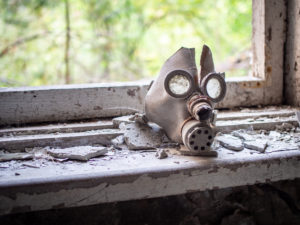
At the time of the explosion, I was aboard a train to the southern Russian resort town of Anapa, where I spent nearly two months on the shore of the Black Sea receiving medical treatment for asthma induced by severe seasonal allergies. There, unbeknownst to me, I too was exposed ...
Read More
The Traumas of Chernobyl

Barbarism or Barbarism?

Timothy Morton proposes an ecology without nature. In Molecular Red I thought it made more sense to think a nature without ecology, as nature is the more capacious and historically variable term, whereas a logos of the oikos – ecology – is precisely what can no longer be said to ...
Read More

Theory for the Anthropocene

Roy Scranton, Stephanie Wakefield, and McKenzie Wark participated in a lecture on the Anthropocene. Our world is changing. Rising seas, spiking temperatures, and extreme weather imperil global infrastructure, crops, and water supplies. Our greatest enemy, it turns out, is ourselves. The warmer, wetter, more chaotic world we now live in -- the Anthropocene -- demands an intensive rethinking of ...
Read More
Theory for the Anthropocene